Ghana’s Ambassador to Austria and Permanent Representative to the United Nations in Vienna, Her Excellency Matilda Aku Alomatu Osei-Agyeman has paid a working visit to the Ghana Atomic Energy Commission (GAEC) in Accra.
The visit gave the Ambassador the opportunity to familiarize herself with the Commission’s research activities, infrastructure, scientific expertise, and contributions to national development through nuclear science and related technologies.
Welcoming the Ambassador, the Director General of GAEC, Prof. Samuel Boakye Dampare, expressed his delight at receiving her at the Commission, describing the visit as significant in reinforcing the longstanding collaboration between GAEC and Ghana’s Mission in Vienna.
Prof. Dampare noted that the cordial relationship between GAEC and the Mission has played a pivotal role in advancing Ghana’s participation in international nuclear cooperation and the activities of the International Atomic Energy Agency (IAEA).
“We are honoured to welcome you to GAEC. Your support and the hospitality consistently extended to our staff whenever they visit Vienna are deeply appreciated. We are pleased that you have taken the opportunity to visit us and witness first-hand the breadth of work we undertake to support Ghana’s socio-economic development through nuclear science and technology,” he said.
Addressing GAEC Management, Ambassador Osei-Agyeman expressed appreciation to the leadership and staff of GAEC for the warm reception, noting that her decision to visit GAEC was motivated by her desire to gain a better understanding of the Commission’s operations to represent Ghana more effectively at the IAEA and other international platforms.
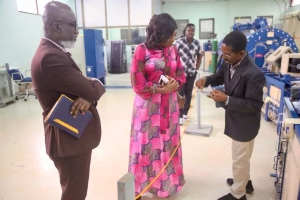
Ghana’s Ambassador to Austria, Her Excellency Matilda Aku Alomatu Osei-Agyeman (middle), touring the Accelerator Research Centre during her visit to GAEC.
“I have been in Vienna for a little over a year, and I felt it was important to come and see for myself what GAEC does. When I speak about Ghana’s achievements in nuclear science and technology, I want to do so from first-hand knowledge,” she stated.
She praised GAEC for its consistent technical support to Ghana’s Mission in Vienna, highlighting that the Commission has always responded promptly whenever expert information was required for international engagements.
“Whenever I ask for guidance or technical information, it comes within record time. That support gives me confidence whenever I represent Ghana at international discussions,” she noted.
She added that her visit would enable her to better appreciate the Commission’s achievements, understand its challenges and improve advocacy for Ghana’s nuclear science agenda on the international stage.
Delivering an overview of the Commission, the Deputy Director General of GAEC, Prof. Francis Hasford, highlighted the Commission’s broad mandate and growing contribution to national development through research, innovation, capacity building and specialised technical services.
“Over the years, the Commission has screened more than 3,000 people for various cancers, trained hundreds of farmers and radiation professionals, monitored over 800 telecommunications base stations, tested hundreds of environmental samples for radioactivity and engaged thousands of students in science education programmes,” he stated.
He further highlighted GAEC’s facilities, including the Ghana Research Reactor-1 (GHARR-1) Centre, Gamma Irradiation Facility, Secondary Standards Dosimetry Laboratory and the Radioactive Waste Management Centre, all of which support research, healthcare, industry, and food preservation.
Prof. Hasford expressed appreciation to the Ambassador for her continued support and was optimistic that the visit would open new opportunities for deeper collaboration between GAEC, Ghana’s Mission in Vienna and the IAEA.
The Ambassador later toured selected facilities including the Ghana Research Reactor-1 (GHARR-1) Centre, the Personnel Dosimetry Laboratory, the Radioactive Waste Management Centre, the Accelerator Research Centre, the E2 Small Modular Reactor Simulation Centre, the GAEC AI Centre, the Plant Disease Research Centre and the Gamma Irradiation Facility to gain a first-hand appreciation of GAEC’s research, scientific infrastructure and innovative technologies.
The Ghana Atomic Energy Commission (GAEC) has urged stakeholders to support efforts to protect Ghana’s groundwater systems, warning that growing environmental pressures threaten a vital source of water for millions of people.
The call was made at the National Stakeholder Meeting on Isotope Hydrology held at GAEC under the International Atomic Energy Agency (IAEA) Technical Cooperation Project RAF 7024, “Accelerating the Use of Isotope Hydrology in Water Resources Management in Africa.”
The meeting brought together researchers, policymakers, academics, regulators, water sector institutions and development partners to discuss how isotope hydrology coupled with other conventional techniques can support sustainable water resources management.
Delivering the welcome address on behalf of the Director-General of GAEC, Prof. Samuel Boakye Dampare, the Dean of the Graduate School of Nuclear and Allied Sciences (SNAS), Prof. Richmond Fianko, underscored the urgency of safeguarding Ghana’s water resources in the face of increasing environmental threats.
“Water remains the single most important natural resource for human survival, yet it is also among the most threatened,” he said.
He cited the impacts of degradation on rivers and other surface water bodies through illegal mining, poor waste management and unsustainable agricultural practices.
According to him, the growing pressure on surface water sources has made groundwater increasingly important for domestic, agricultural and industrial use.
“Isotope hydrology offers critical scientific tools for understanding how aquifers are recharged, assessing their vulnerability to pollution and saltwater intrusion, as well as supporting sustainable management strategies”, he added.
Prof. Fianko stressed that the protection of groundwater resources requires strong collaboration among stakeholders, noting that scientific research is most effective when supported by broad institutional participation and national ownership.
The Director of the National Nuclear Research Institute (NNRI) and Project Counterpart, Prof. Samuel Ganyaglo, in a short remark highlighted the strategic importance of the Volta Basin, describing it as a lifeline for millions of people through its contribution to agriculture, energy production and domestic water supply.
“Increasing water demand and climate-related pressures require more advanced scientific approaches to water resource management”, he said.
He further indicated that Ghana’s isotope hydrology programme has grown significantly since the establishment of the Isotope Hydrology Laboratory in 2005 through a collaboration between GAEC, national stakeholders and the International Atomic Energy Agency.
“What began as a national initiative has evolved into a regional effort involving several African countries working within shared aquifers and river basins,” he said.
Prof. Ganyaglo added that isotope techniques generate reliable scientific data that can support evidence-based policymaking and help protect groundwater and river systems for future generations and called on participants to engage actively in developing a unified roadmap for water security.
The IAEA Project Management Officer (PMO), Mr. Chukwudi Anyanwu, emphasized the need to strengthen the utilization of data generated through the project by research institutions, academia, and policymakers.
“Scientific findings must move beyond data generation to practical application in addressing water management challenges across Ghana and the wider Volta Basin,” he said.
Mr. Anyanwu also posed a number of pertinent questions to participants to stimulate discussions and encourage the exchange of ideas on the effective implementation of the project.
Present at the national stakeholder meeting were researchers from the Ghana Atomic Energy Commission (GAEC), the Water Resources Commission (WRC), the Community Water and Sanitation Agency (CWSA), and the Water Research Institute (WRI) of the Council for Scientific and Industrial Research (CSIR). Other participants included representatives from academia, financial institutions, development partners, and policymaking bodies.
Participants reviewed findings from earlier phases of the IAEA-supported programme and discussed priorities for the current phase of the project, including the selection of study sites, sampling strategies, analytical requirements, and stakeholder roles. The engagement is expected to produce a coordinated framework for implementing isotope hydrology studies within the Volta Basin while strengthening Ghana’s leadership in the application of nuclear technologies and other advanced scientific methods for sustainable water resources management in West Africa.
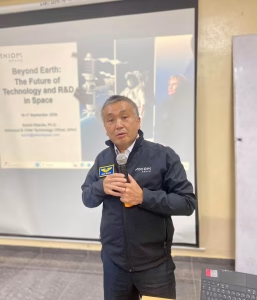
The Ghana Space Science and Technology Institute (GSSTI) of the Ghana Atomic Energy Commission (GAEC) hosted Japanese astronaut Dr. Koichi Wakata as part of efforts to inspire young Ghanaians to pursue careers in engineering and space exploration.
The event, dubbed the Astronaut and Strategic Partnership Meeting, was held at the Ghana Radio Astronomy Observatory (GRAO) under the theme, “From Ghana to Space: Building Africa’s Next Generation of Space Scientists and Explorers.”
The programme brought together staff, students, researchers and policymakers to discuss Ghana’s space development journey, opportunities for international collaboration and the future of space science in the country.
Delivering the welcome address, the Director of GSSTI, Dr. Joseph Tandoh, stated that Ghana’s space journey began in 2011 when the country joined the Square Kilometre Array (SKA) project, an international initiative aimed at developing the world’s largest radio telescope network.
The Director of GSSTI, Dr. Joseph Tandoh, delivering his welcome address at the event.
“Ghana successfully converted an abandoned satellite communication dish at Kuntunse into a functioning radio telescope, leading to the establishment of the Ghana Radio Astronomy Observatory in 2017. With support from Japan, Ghana also launched its first satellite that same year, marking a significant milestone in its journey towards becoming an active participant in the global space industry,” he explained.
Dr. Tandoh noted that Ghana had since developed a National Space Policy, which was approved by Cabinet and officially launched in 2024, while efforts continue to establish the legal and institutional framework required for its full implementation.
“Space technology already supports our daily lives through communication, navigation, weather forecasting and many other services. We want Ghana to move beyond being merely a consumer and become a contributor to the global space economy. This engagement with the renowned astronaut is intended to inspire scientists, researchers and students and encourage more young Ghanaians to pursue careers in space science and related fields,” he said.
Dr. Tandoh acknowledged that while sending a Ghanaian astronaut into space remains a long-term aspiration, the dream is achievable with sustained commitment and investment.
“If we invest in the right infrastructure, resources and human capital, Ghana can one day produce its own astronaut,” he added.
Addressing participants at the event, Dr. Koichi Wakata, who has flown to space five times and spent more than 500 days in orbit, described his visit as an opportunity to deepen collaboration between Ghana and international partners in the space sector.
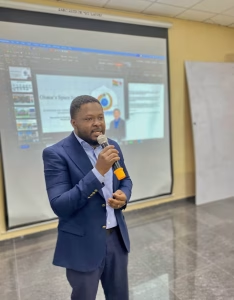
Dr. Koichi Wakata delivering a presentation on space exploration during the programme.
He noted that Ghana’s future in space lies in building local capacity in satellite development, operation and utilisation.
According to him, satellite technology has the potential to support critical sectors such as agriculture, fisheries, mining, environmental monitoring and disaster management through satellite imagery, data collection and real-time monitoring.
“As I mentioned earlier, I witnessed the deployment of Ghana’s first satellite from the International Space Station in 2017. It is important for Ghana to continue expanding its capabilities in satellite production, operation and utilisation,” he stated.
He encouraged Ghanaian students to take advantage of opportunities in space research, suggesting that student-led experiments could be sent to space as a cost-effective means of promoting science education and innovation.
“Student experiments can be sent to the International Space Station. Even simple projects, such as growing plants in space, can be exciting and inspiring for young people. I believe selecting experiments through national competitions and sending them to space would be a cost-effective way to promote science education and build capacity in space science and technology,” he said.
He emphasised that international cooperation remains essential for any country seeking success in space exploration.
“It is very difficult to do it on your own. You need partners, and that is why collaboration is important,” he added.
Speaking on her experience, a final-year student of Kwabenya Community Senior High School, Ms. Okyere Margaret Afia Boaduwaa, said the programme had inspired her despite her interest in medicine rather than astronomy.
“Today I got to meet a real astronaut and participate in the programme. It has inspired me because I now see how everything is connected through science and technology,” she said.
Another student participant from the GAEC Basic School, Mr. Jeremy Sosu, described meeting Dr. Wakata as a dream come true and said the interaction had strengthened his interest in science. He expressed hope that the experience would inspire more young people to pursue careers in science, technology, engineering and mathematics (STEM).
The engagement formed part of GSSTI’s efforts to promote science education, strengthen international partnerships and inspire the next generation of Ghanaian scientists and innovators to contribute to the country’s growing space programme.
The Biotechnology and Nuclear Agriculture Research Institute (BNARI) of the Ghana Atomic Energy Commission (GAEC) has organized the 2026 Malaria Awareness Campaign (MAC 26) at Taifa Community Cluster of Schools, Ga East Municipality, Accra.
The campaign, coordinated by Dr. Enoch Selorm Kofi Ofori, Manager of the Radiation Entomology and Pest Management Centre of BNARI-GAEC, aimed to educate the public on malaria prevention, control, screening, and treatment. It brought together students, health professionals, researchers, community members, and other stakeholders to discuss strategies for combating malaria and promoting healthier communities.
The event, organized in partnership with key stakeholders, forms part of BNARI-GAEC’s commitment to giving back to society and supporting national efforts to reduce the incidence of malaria through public education and community engagement.
Addressing participants, the Director of BNARI, Prof. Michael Osae, warned that changing mosquito behaviour is creating new challenges for malaria control efforts.
The Director of BNARI, Prof. Michael Osae, addressing students of the Taifa Community Cluster of Schools during the 2026 Malaria Awareness Campaign.
He noted that mosquitoes are increasingly biting both indoors and outdoors, making it necessary to complement traditional interventions such as insecticide-treated bed nets with additional protective measures.
“For many years, our primary focus has been indoor mosquito biting. Today, we are seeing mosquitoes adapt by biting outdoors and at unusual times of the day, reducing the effectiveness of interventions designed solely for indoor protection while people are in bed,” he said.
Despite these challenges, Prof. Osae emphasized that sleeping under insecticide-treated bed nets remains one of the most effective malaria prevention strategies. He stated that bed nets continue to save lives and must remain a central pillar of malaria prevention and every household should ensure that vulnerable groups, especially children and pregnant women, consistently sleep under treated nets.
Drawing attention to the evolving nature of the malaria challenge, Prof. Osae described mosquito adaptation as part of an ongoing coevolutionary struggle between humans and disease vectors.
“What we are witnessing is a coevolutionary arms race. As humans develop new methods to control mosquitoes, mosquito populations adapt their behavior to survive. Our response must therefore be continuous innovation and vigilance,” he said.
He further highlighted the growing challenge of residual malaria transmission, which persists even in communities with high coverage of established interventions.
Prof. Osae therefore called for increased adoption of mosquito repellents as an additional layer of protection against outdoor-biting mosquitoes. Noting that personal repellents could provide critical protection for people who spend time outdoors during peak mosquito biting hours. He added that innovations such as the Med Share Mosquito Repellant, which has been tested by GAEC, demonstrate the important role local research and industry can play in malaria prevention.
Addressing environmental control measures, he stressed the importance of eliminating mosquito breeding grounds before mosquitoes mature into adult vectors by paying greater attention to larval source management through clearing stagnant water, improving sanitation and targeted treatment of breeding sites.
Prof. Osae also underscored the need for stronger social and behavioral change interventions, particularly in settings where people gather during the evenings.
“Malaria control is not only about science and technology but also about human behaviour. Open-door churches, pubs, night food vending centres and other social gathering places should be encouraged to adopt measures that reduce exposure to mosquito bites”, he added.
Prof. Osae further urged stakeholders to strengthen collaboration among researchers, policymakers, healthcare workers and communities to accelerate progress towards malaria elimination.
Students of the Taifa Community Cluster of Schools participating in the 2026 Malaria Awareness Campaign.
Also speaking at the programme, the Municipal Director of Education for Ga East, Mr. Eric Sey, commended BNARI-GAEC for organising the awareness campaign and described it as a timely intervention in the fight against malaria. According to him, programmes of this nature play a critical role in educating school children and communities on preventive health practices and contribute significantly to improving public health outcomes.
“Malaria remains one of the leading causes of illness among school-age children, affecting attendance, academic performance and the general well-being of our learners. Educational institutions therefore have an important role to play in promoting awareness and prevention,” he stated.
Mr. Sey appealed to the Ministry of Education to strengthen its support for school-based health awareness programmes, noting that such interventions play a critical role in educating learners on disease prevention.
He further cautioned against the dangers of malaria and urged community members to seek prompt medical attention whenever symptoms are detected, adding that malaria is a serious disease that can lead to severe illness and even death if left untreated.
“We must discourage self-medication and encourage individuals to seek early diagnosis and treatment at recognised health facilities. Early treatment saves lives and helps prevent complications,” he advised.
Mr. Sey also encouraged students to serve as ambassadors of malaria prevention by sharing information acquired during the programme with their families and communities.
The Head of the Vector Control Unit of the National Malaria Elimination Programme (NMEP), Madam Otubea Owusu Akrofi, in a statement also stressed that malaria prevention is both an individual and collective responsibility.
She noted that while government and health institutions continue to implement interventions to reduce malaria transmission, communities and individuals must also play their part by adopting preventive measures and maintaining clean environments.
Madam Owusu Akrofi emphasized that one of the most effective ways of preventing malaria is the elimination of mosquito breeding sites, many of which are found around homes and public spaces and called on community members to work collectively to maintain clean neighbourhoods, explaining that “the actions of one household can affect the health and safety of an entire community”.
“A clean environment benefits everyone. When communities come together to eliminate breeding sites, they significantly reduce mosquito populations and lower the risk of malaria transmission. Malaria prevention therefore requires a shared commitment from all of us,” she added.
Madam Owusu Akrofi also encouraged participants to consistently adopt preventive measures such as sleeping under insecticide-treated bed nets, using repellents where necessary and seeking prompt treatment whenever symptoms of malaria occur.
Present at the programme were the Headteacher of Taifa Community 1 Basic School, Mr. Godfred Tenkorang; the Headmistress of Taifa Community 2 Basic School, Madam Dorcas Tetteh; and the Headteacher of Taifa Community 3 Basic School, Mr. Morris Quaye.
Also in attendance were the medical team from Taifa Polyclinic; the Deputy Director of BNARI, Prof. Samuel Amiteye; Dr. Dinah Marri, Research Scientist at GAEC; Dr. Ekene Nwaefuna, Research Scientist at GAEC; Dr. Irene Opoku Ntim, Research Scientist at GAEC; Dr. Mark Kwasi Sarfo, Head of Communications and Public Relations at GAEC; Mr. Bright Courage Agbodza, Auditor at BNARI; Mr. Theodore Odame Saforo, Acting Administrator of BNARI; and Mrs. Doris Esi Bigombi, Accountant at BNARI, as well as several other distinguished officials.
Experts from Ghana Atomic Energy Commission (GAEC) and other leading State water institutions have raised concerns that poor infrastructure, pollution, weak governance and climate-related pressures are threatening the country’s long-term water security.
The concerns were raised at a national stakeholder meeting hosted by GAEC under the International Atomic Energy Agency (IAEA) RAF 7024 Project, titled; “Accelerating the Use of Isotope Hydrology in Water Resources Management in Africa.”
The meeting brought together researchers, academics, regulators and water-sector practitioners to discuss the growing pressures on Ghana’s water resources, including failing rural water systems, groundwater contamination, illegal mining, climate variability and weak monitoring systems.
Presentations delivered by Dr. Joseph Ayer, Chief Hydrogeologist of the Community Water and Sanitation Agency (CWSA); Prof. Samuel Y. Ganyaglo, Director of the National Nuclear Research Institute (NNRI), Ghana Atomic Energy Commission, and Project Counterpart; Engr. Dr. Collins Okrah, Senior Research Scientist at the Council for Scientific and Industrial Research – Water Research Institute (CSIR-WRI); and Dr. Jesse P. Kazapoe, Head of the White Volta Basin at the Water Resources Commission (WRC), collectively highlighted the urgent need for reforms to safeguard Ghana’s water future.
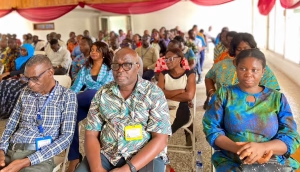
A cross section of participants at the National Stakeholder Meeting.
Speaking on “Rural Water Supply in Ghana,” Dr. Joseph Ayer highlighted significant progress in rural water access over the past three decades.
“Rural water coverage increased from 27% in 1990 to 60% by 2025, supported by the construction of over 39,000 boreholes, 1,500 mechanised water systems, and more than 500 small-town piped water systems”, he revealed.
Despite these achievements, he warned that the sustainability of rural water services is at risk due to limitations of the Community Ownership and Management (COM) model.
“Many communities lack the technical, financial, and managerial capacity to maintain increasingly complex water systems, leading to breakdowns, poor maintenance, financial challenges, and inadequate revenue generation”, he said.
He added that out of the 355 water systems currently managed by community-based water and sanitation (WATSAN) teams, only 259 are functional, while 96 have failed because of issues such as pump breakdowns, abandoned boreholes, electricity disconnections, damaged infrastructure, leaking storage tanks, and water quality concerns. Dr. Ayer estimated that GHC 976 million (US$81.3 million) is needed to rehabilitate these systems and restore safe water access in affected communities across 59 districts.
In another presentation, the project counterpart, Prof. Samuel Y. Ganyaglo, presented findings from an isotope hydrology-based groundwater research conducted under an International Atomic Energy Agency-supported project, where particular attention was drawn to emerging groundwater quality challenges in northern Ghana.
The research focused on the Upper Volta and Oti basins, where isotope and hydrogeochemical techniques have been deployed to understand groundwater recharge processes, contamination sources and climate-related vulnerabilities.
Prof. Ganyaglo reported that elevated nitrate levels have been detected in parts of the crystalline basement aquifers of the Upper Volta Basin, while excessive fluoride concentrations in some areas have led to the closure of wells.
“One of the most significant findings of the research is that agricultural manure is the dominant source of nitrate contamination in many groundwater systems. The studies also revealed that some aquifers contain water recharged under ancient climatic conditions, requiring careful regulation of abstraction to prevent groundwater mining” he revealed.
He called for stricter regulation of manure application on farmlands to prevent further degradation of water quality and further noted that groundwater contributes significantly to river flows during dry periods, sustaining surface water availability for irrigation and food production.
Prof Ganyagloh stressed the importance of isotope hydrology in providing critical scientific evidence that can support national water-resources planning and enhance sustainable management of both groundwater and surface-water systems.
“Significant gaps remain in understanding groundwater-surface water interactions and the full impact of illegal mining on groundwater resources. To close these gaps, we propose long-term monitoring of rainfall, surface water and groundwater using isotope hydrology techniques across key areas of the Volta Basin”, he suggested.
Providing a broader national perspective, Engr. Dr. Collins Okrah of CSIR-WRI warned that although Ghana is not yet experiencing a nationwide groundwater crisis, the country’s freshwater security is becoming increasingly vulnerable.
In his presentation on the status of Ghana’s groundwater resources, he observed that groundwater remains a strategic resource for rural water supply, agriculture, industry and ecosystem sustainability.
“Groundwater accounts for approximately 96 percent of the world’s available freshwater resources and serves as a critical buffer during periods of drought and seasonal water shortages”, he said.
Dr. Okrah identified a range of threats facing Ghana’s aquifers, including uncontrolled groundwater abstraction, drought, declining recharge rates, salinity intrusion, urbanisation and inadequate monitoring.
He highlighted illegal mining, popularly known as galamsey, as a major driver of water pollution, environmental degradation and aquifer disturbance, warning that its impacts extend beyond rivers to groundwater systems.
Citing recent water resource assessments, Dr. Okrah stated that Ghana’s water stress level has declined from about 1,900 cubic metres per person in 2016 to approximately 1,500 cubic metres per person in 2025, reflecting growing pressure on the country’s freshwater resources.
“Continued pollution and mismanagement could lead to rising treatment costs, intensify competition among domestic, agricultural and industrial users, and potentially force the country to invest in costly alternatives such as desalination and long-distance water transfers” he added.
Another major concern raised by Dr. Okrah was the absence of a comprehensive national groundwater monitoring system. Adding, “We cannot manage what we cannot measure.”
He argued that Ghana urgently needs a permanent national observation network to track groundwater levels, recharge dynamics, abstraction rates and water quality trends across major aquifers and river basins. He further proposed the establishment of a Ghana National Groundwater Observation Network and called for groundwater to be officially recognised as a strategic national freshwater-security resource.
The policy dimension of water resources management in Ghana was outlined by Dr. Jesse P. Kazapoe of the Water Resources Commission and stressed that water security is fundamentally linked to governance, regulation and effective implementation of policy.
He noted that water supports domestic supply, agriculture, industry, energy production, ecosystems and public health, making its sustainable management a prerequisite for national development.
“Ghana’s policy focus must shift from merely providing more water to ensuring that water resources are secure, sustainable and equitably governed”, he noted.
Dr. Kazapoe identified several emerging pressures on Ghana’s water resources, including illegal mining, wastewater discharge, catchment degradation, droughts, floods, land-use changes, infrastructure deficits and growing competition among water users. He therefore underscored the importance of groundwater, particularly in the White Volta Basin, where groundwater constitutes more than 80 percent of safe water supplies in some communities.
He further cited studies within the Volta Basin showing severe contamination in upstream and midstream tributaries, where illegal mining and sand-winning activities have contributed to elevated turbidity and the presence of contaminants such as cadmium, lead, chromium and cyanide.
“These findings reinforce the need for stronger enforcement of environmental regulations, integrated water-resources management and sustained investments in watershed protection and monitoring systems”, he said.
The consensus emerging from the presentations is that Ghana still has an opportunity to avert a future water crisis. However, doing so will require decisive investments in infrastructure rehabilitation, groundwater protection, scientific monitoring, pollution control, stronger enforcement of regulations and institutional reform.
The Minister for Environment, Science and Technology (MEST), Hon. Dr. Zanetor Agyemang-Rawlings inspected ongoing construction works at the Foundry and Machine Tooling Center located at Ghana Atomic Energy Commission (GAEC).
The visit forms part of government’s efforts to monitor the progress of strategic science and technology infrastructure projects aimed at boosting local manufacturing, engineering innovation, and industrial capacity.
During the visit, the Minister received updates from project engineers, contractors and officials of GAEC on the progress of work, project timelines, and the expected impact of the facility upon completion.
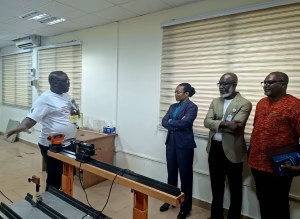
MEST Minister (Center left) receiving an update on the progress of construction works at the Foundry and Machine Tooling Center during her visit.
Addressing stakeholders at the site, the Minister expressed concern about the pace of work and called on the contractors to deploy additional resources and manpower to expedite construction.
She emphasized that any delays could affect the project’s strategic role in supporting Ghana’s industrialization and technological advancement efforts.
“This facility represents a significant investment in science, technology, and innovation. Once completed, it will enhance local manufacturing capabilities, create employment opportunities, and provide a platform for research and technical training,” she stated.
The Center is expected to play a critical role in supporting research, technical skills development, and the production of machine tools and industrial components, thereby contributing to Ghana’s industrial development and technological advancement. The facility is also expected to serve as a hub for manufacturing, engineering innovation, and industrial research to foster collaboration between industry, academia, and research institutions.
The Minister was accompanied by officials from the Ministry of Environment, Science and Technology (MEST), including the Director of Policy, Planning, Monitoring and Evaluation (PPME), Mr. Mawuli Segbefia
Present to receive the Minister and her entourage were the Director of the Biotechnology and Nuclear Agriculture Research Institute (BNARI), Prof. Michael Osae; the Director of Administration, Mr. William Srekumah; and the Director of the Commercialization and Communication Directorate, Nana Boateng. Also present were the Deputy Director of Administration, Mr. Emmanuel Kusi Addo; the Head of Communication and Public Relations, Dr. Mark Sarfo; the Head of Security, Captain Kwaku Osei-Akoto; The Head of the GAEC Mechanical Workshop, Dr. Andrew Nyamful and other officials of the Commission.
The Ghana Atomic Energy Commission (GAEC) has tested the readiness of its security personnel to respond to potential security breaches at its nuclear installations as part of efforts to strengthen the Commission’s nuclear security architecture.
The two-day exercise, dubbed the Alarm Response Limited Scope Performance Test (AR-LSPT 2026), is designed to assess the effectiveness of existing response arrangements, identify gaps and strengthen the Commission’s capacity to respond to security incidents.
The exercise, which began yesterday at the GAEC reactor site, brought together security personnel and other staff with designated roles in the Commission’s security and emergency response arrangements for briefings, table discussions and field exercises based on simulated security scenarios.
The first day focused on an overview of the exercise, its objectives and participants’ roles and responsibilities, followed by discussions and practical exercises based on two simulated scenarios at designated staging areas.
The second day is expected to focus on evaluation, with personnel from the Office of Radiological Safety (ORS) of the United States Department of Energy (USDOE) serving as evaluators and providing feedback on the performance of the personnel, response arrangements and supporting systems.
Speaking on the exercise, the Director of the Radiation Protection Institute of GAEC, Dr. Eric Glover, said it formed part of broader support to strengthen the Commission’s security architecture through improvements in access control, closed-circuit television systems, alarm systems and radio communication equipment, among other measures.
He explained that the exercise provided an opportunity to assess not only personnel readiness but also the effectiveness of the equipment, logistics and coordination among personnel performing different roles during a security incident.
According to him, the exercise was the first of its kind to be conducted at the Commission and would help identify areas requiring improvement while ensuring that established procedures remained effective.
He said the exercise would also contribute to strengthening security procedures, addressing gaps, building a strong security culture and improving the Commission’s preparedness to manage potential crises and other eventualities.
The Head of GAEC Security, Capt. (Rtd.) Kwaku Osei-Akoto Jnr., said the exercise was intended to test the ability of security personnel to respond effectively to future eventualities.
Briefing participants at the start of the exercise, he outlined key objectives, including assessing response performance from the receipt of an alarm through to the appropriate containment and resolution of a simulated incident, evaluating alarm-handling and communication arrangements, testing the effectiveness of response procedures and equipment, and identifying gaps requiring remedial action.
He explained that the exercise involved personnel assigned to alarm monitoring and communication, on-site security and facility management, with each group expected to perform its designated responsibilities in accordance with established procedures.
The exercise is expected to provide GAEC with an independent assessment of its security preparedness and help strengthen coordination, procedures and response capabilities.
The initiative forms part of the Commission’s continuing efforts to maintain a robust nuclear security culture and ensure that its nuclear and radiological facilities are operated within a strong framework of safety, security and emergency preparedness.
The Ghana Atomic Energy Commission (GAEC) on Tuesday launched the 2026 Cancer Awareness and Screening Campaign with a call on Ghanaians to prioritise regular cancer screening for early detection.
The campaign is being organised by the Radiological and Medical Sciences Research Institute (RAMSRI) of GAEC, in collaboration with the GAEC Hospital.
Held in Accra on the theme, “Your Health Matters: Get Screened,” the campaign seeks to promote public education on cancer prevention, early detection, diagnosis and effective treatment, with particular emphasis on breast and prostate cancers.
The initiative will also provide free screening services and extend cancer awareness activities to communities across the country to encourage early detection and timely medical intervention.
Speaking at the launch, the Chairperson of the GAEC Governing Board, Professor Abdulai Baba Salifu, identified stigma, fear, financial constraints and inadequate awareness as some of the major barriers preventing people from accessing cancer screening and treatment.
The Chairperson of the GAEC Governing Board, Professor Abdulai Baba Salifu, delivering his address at the launch of the 2026 Cancer Awareness and Screening Campaign.
He noted that the campaign provided an opportunity to break those barriers and encourage Ghanaians to take early action in managing their health.
Professor Salifu emphasised that undergoing screening did not mean that a person had cancer, but rather provided an opportunity to know their health status and seek appropriate medical attention when necessary.
“Screening does not mean you have cancer. It gives you the opportunity to know your health status and seek appropriate medical attention when necessary,” he said.
He therefore called on the media, traditional authorities and community leaders to help take the screening message beyond hospitals and medical facilities into communities.
“The media, traditional authorities and community leaders must help us to take the screening message beyond hospitals and medical facilities and into our communities,” he said.
The Board Chairperson assured RAMSRI, the GAEC Hospital and other partners of the Governing Board’s continued support for efforts to promote a shift from fear to knowledge, silence to conversation and late detection to early action.
Supporting the call, the Director-General of GAEC, Professor Samuel Boakye Dampare, stressed the importance of early screening and detection in improving cancer treatment outcomes.
He observed that many people neglected routine medical check-ups and cancer screening until symptoms became severe, by which time valuable opportunities for effective treatment could have been lost.
Professor Dampare urged the public to pay greater attention to prevention, early detection and timely treatment, noting that the cancer burden should not be viewed merely in terms of statistics.
“Behind every figure is a person, a family and a community,” he said.
The Director-General further underscored the need for a coordinated national response to cancer, stressing that the fight against the disease could not be left to the health sector alone.
He called for stronger collaboration among individuals, families, institutions, researchers, healthcare professionals, policymakers, communities and development partners to intensify cancer prevention, awareness and early detection.
“The fight against cancer cannot be left to the health sector alone,” he said.
The call for greater awareness comes against the backdrop of a significant cancer burden in Ghana and globally.
According to the International Agency for Research on Cancer’s GLOBOCAN 2024 estimates, Ghana recorded an estimated 27,260 new cancer cases and 17,662 cancer-related deaths.
Breast cancer was the most frequently diagnosed cancer in the country, with an estimated 5,487 cases, followed by cervical cancer with 3,740 cases, liver cancer with 2,975 cases, prostate cancer with 2,817 cases, and ovarian cancer with 1,268 cases.
Globally, GLOBOCAN 2024 estimates 20.6 million new cancer cases and 9.7 million cancer-related deaths.
Against this background, the Director of RAMSRI, Dr Theodosia Adom, said the 2026 campaign would build on the gains made during the previous year’s programme.
She explained that the 2025 campaign reached five corporate organisations, four health facilities, five community markets, three churches and a secondary school.
More than 2,500 people were screened during the campaign, while more than 300 people participated in a health walk.
The campaign also distributed about 3,000 educational flyers and used television, radio and social media platforms to disseminate information on cancer prevention and screening.
Dr Adom indicated that risk data collected from 2,232 women during the 2025 campaign further demonstrated the need to intensify cancer awareness and screening.
“Those figures tell us that there is still a lot more that needs to be done in terms of awareness and screening,” she said.
Building on those efforts, she disclosed that the 2026 campaign would include free screening for cervical and prostate cancers, alongside other health checks.
“The 2026 campaign is taking screening and cancer awareness directly to the communities,” she said.
The programme will involve health facilities including the Korle-Bu Teaching Hospital, the University of Ghana Medical Centre and the GAEC Hospital, as well as other partner institutions.
To take the campaign beyond health facilities, community engagements have been planned for the Kwabenya and Taifa markets, Dambai and Jasikan in the Oti Region, Shama in the Western Region and Upper Manya Krobo in the Eastern Region.
A health walk is scheduled for October 9, followed by further engagements with the media, corporate organisations and religious bodies in November.
Dr Adom said the campaign would also address fear, stigma and misconceptions surrounding cancer while encouraging people to recognise warning signs and seek medical attention promptly.
A solidarity message was delivered on behalf of the Ministry of Health, while the Member of Parliament for Dome-Kwabenya, Madam Faustina Elikplim Akurugu, pledged her support and expressed readiness to facilitate stronger partnerships with GAEC.
The 2026 Cancer Awareness and Screening Campaign, the fourth since 2023, is expected to strengthen public understanding of cancer prevention and early detection, bring screening services closer to communities, and encourage Ghanaians to make regular screening part of their healthcare routine.
Ghana Atomic Energy Commission (GAEC) Scientists highlighted their contributions to artificial intelligence (AI) research and development at a recent Artificial Intelligence for Sustainable Development (AI4SD) Conference in France.
The FEF-AI4SD (Fonds Expertise France for Artificial Intelligence for Sustainable Development) Conference, organized by Universite Paris Saclay, was aimed at strengthening Franco-Ghanaian partnerships, leveraging artificial intelligence to drive sustainable development, foster knowledge exchange, and build local research capacity in Africa.
The event provided an opportunity to showcase the diverse ways Scientists from GAEC are applying AI to improve lives and support national development.
The GAEC contingent presented various research works aimed at addressing real-world challenges in agriculture, health, climate resilience, medical imaging, and space science.
The Deputy Director General of GAEC, Prof. Francis Hasford presenting on building institutional AI capacity through France–Ghana partnerships at the FEF-AI4SD Paris Conference.
On the second day of the event, the Manager of the Remote Sensing and Climate Change Center of the Ghana Space Science and Technology Institute (GSSTI), Dr. Kofi Asare, delivered two presentations. His first presentation titled “From Pixels to Productivity: AI-Driven Crop Classification and Yield Prediction Using Earth Observation Data in Ghana”, focused on using satellite and Earth observation data to improve crop classification and predict yield for maize at the end of the season. The research demonstrated how AI can help farmers, agricultural planners, and policymakers make better decisions to boost productivity and strengthen food security.
Dr. Asare’s second presentation titled “AI-Driven Climate–Health Modelling for Malaria and Diarrhoea Disease Burden under Future Climate Scenarios in Ghana”, explored the intersection of climate change, public health data and AI tools to project disease burden by midcentury. The study examined how changing climatic conditions could influence the future burden of malaria and Diarrhoea in Ghana. The work underscores the potential of artificial intelligence to support early warning systems and inform public health interventions in a changing climate.
Another important presentation was delivered on the third day by the Manager of the Applied Radiation Biology Centre of the Radiological and Medical Sciences Research Institute (RAMSRI), Dr. Shadrack Donkor, on healthcare novelty, titled “Wound Healing Potential of Moringa oleifera Extracts in Normal Tissue Following Preoperative Radiotherapy: An AI-Assisted Phytochemical Compound Prediction Approach”, where he showed the wound-healing properties of Moringa oleifera extracts following preoperative radiotherapy. The study demonstrated how artificial intelligence can accelerate biomedical research and support the search for effective therapeutic solutions by incorporating AI-assisted Phytochemical Compound predictions.
Additionally, the Deputy Director of the Ghana Space Science and Technology Institute (GSSTI), Dr. Theophilus Ansah-Narh, whose presentation introduced a novel AI approach known as GLIMPSA: Global-Local Inference Method for Patch-based Spatial Anomalies in Medical Imaging, used for detecting spatial anomalies in medical images, demonstrated that the technology has the potential to enhance medical diagnosis and improve the accuracy of image-based healthcare assessments.
On the last day of the conference, the Deputy Director General of Ghana Atomic Energy Commission, Prof. Francis Hasford, highlighted the importance of partnerships and strategic investments in AI development. His presentation was titled “Building Institutional AI Capacity at GAEC Through Strategic France–Ghana Collaborative Partnerships”. He presented on efforts being made to strengthen GAEC’s institutional AI capacity through collaborative partnerships especially those between Ghana and France and emphasized the value of international cooperation in developing the skills, infrastructure, and research networks needed to advance AI innovation.
In another presentation, titled “Integrating Nuclear Science and Artificial Intelligence for Precision Health and National Development in Ghana: The Role of RAMSRI”, the Director of the Radiological and Medical Sciences Research Institute (RAMSRI), Dr. Theodosia Adom, explored how artificial intelligence can complement nuclear science to deliver more precise healthcare solutions and contribute to national development goals through their work at RAMSRI and the associated opportunities created by these advanced technologies.
The last presentation by GAEC was given by the Director of the Ghana Space Science and Technology Institute, Dr. Joseph Bremang Tandoh, titled “From Satellites to Solutions: How AI is Transforming Space Science, Technology and Sustainable Development”, he demonstrated how satellite data combined with AI can support environmental monitoring, disaster management, resource planning, and broader sustainable development efforts.
The conference brought together researchers, policymakers, and technology experts from around the world to explore how AI can be harnessed to support sustainable development.
Ghana was represented by scientists from the Ghana Atomic Energy Commission, the Kwame Nkrumah University of Science and Technology (KNUST), University of Cape Coast, and the Ministry of Foreign Affairs.
The Ghana Atomic Energy Commission (GAEC) on Tuesday broke ground on a 48-unit residential apartment complex for its staff, the first significant expansion of staff housing since the Commission’s predecessor, the Ghana Nuclear Reactor Project (GNRP), built its original residential facilities in the early 1960s.
The sod-cutting ceremony, held at the project site behind the GAEC Junior Staff Quarters, was attended by government officials, GAEC management, project partners, and contractors. Prof. Abdulai Baba Salifu, Director-General, GAEC Prof. Samuel B. Dampare, Director General, MEST, Suweibatu Adams, representing the Minister of Environment, Science and Technology (MEST) and Director of Special Operations at the National Security Secretariat, Richard Jakpa, jointly performed the ceremonial cut.
Chairperson of the GAEC Governing Board, Prof. Abdulai Baba Salifu, breaking ground at the sod-cutting ceremony.
Speaking at the event, GAEC Director General Prof. Samuel B. Dampare drew a direct line between the housing project and the Commission’s broader scientific ambitions which now span nuclear energy, space science, advanced medical applications, and environmental monitoring.
“As the Commission positions itself for the future through investments in nuclear energy, space science, advanced medical applications, and industrial technology systems, it becomes increasingly important to attract, motivate, house, and retain the highly specialized scientific and technical expertise required to sustain these national responsibilities,” Prof. Dampare said.
He also placed the project in historical context, noting that the original facilities were built on a philosophy that still holds today.
“Those facilities were built with foresight and purpose, based on the understanding that scientific excellence requires not only laboratories and equipment, but also stable communities, motivated personnel, and an enabling environment for research and innovation,” he said.
The project is being delivered through a Public-Private Partnership (PPP) between GAEC and Muhassin Company Limited. It falls under the broader GAEC Residential Apartments and Related Facilities initiative, developed in collaboration with the Ministry of Environment, Science and Technology (MEST).
Officials say the development is expected to improve living conditions for staff, address longstanding accommodation challenges, and support retention of technical personnel a persistent challenge for science institutions competing with the private sector.