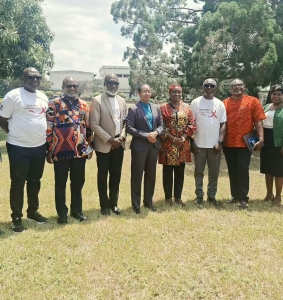
The Biotechnology and Nuclear Agriculture Research Institute (BNARI) of the Ghana Atomic Energy Commission (GAEC) has marked World Food Day 2026 with a seminar on the role of scientific research in improving food security and nutrition in Ghana.
The event, held under the theme “Innovate Today, Nourish Tomorrow,” brought together researchers and scientists to discuss food preservation, the nutritional value of indigenous foods, and the development of food products that support health and address malnutrition.
In his opening remarks, BNARI Director Prof. Michael Osae said food security requires more than increased agricultural production. He called for a holistic approach that guarantees access to nutritious and affordable food for all.
“We must make sure that there is accessible, affordable and nutritious diet on the table for everybody,” Prof. Osae said.
“Post-harvest losses and resource degradation continue to test the resilience of agriculture across every continent. However, this celebration is not merely about identifying these challenges; it is about celebrating our capacity to solve them,” he added
He said that promoting underutilised indigenous foods could improve nutrition and food accessibility despite their declining presence in local markets. He cited snake tomato, which when ripe can substitute for conventional tomatoes in preparing tomato paste.
He encouraged food scientists and researchers to develop recipes and value-added products from neglected crops to increase consumer interest and market demand.
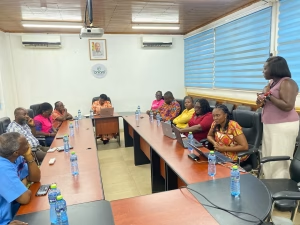
Dr. Dora Duah-Bisiw, a Food Research Scientist at BNARI’s Radiation Technology Centre, spoke on the nutritional benefits of indigenous vegetables. She emphasised innovative preservation methods to ensure vegetable availability beyond peak harvesting periods.
According to her, drying and dehydration offer practical solutions for extending shelf life, reducing waste and ensuring year-round availability. Also, she said that processing vegetables into powdered and other convenient forms could make them easier to incorporate into meals, particularly for children and older adults who may have difficulty chewing certain vegetables.
She identified carrots, turkey berries (Kwahu Nsusuwa), eggplant leaves (Boma) and amaranth leaves (Alefu) as rich sources of iron, zinc and calcium, which contribute to healthy growth, stronger immunity and proper bone development. She encouraged parents and caregivers to include more locally available vegetables in family meals.
Ms. Abena Akyaa Okyere, a Research Scientist with BNARI, discussed the potential of African palm weevil larvae as a source of micronutrients in school meals to help address malnutrition among school-age children in Ghana.
She said a study, conducted as part of her doctoral research, found that the larvae possess a rich micronutrient profile and enjoy high acceptability among communities where they are traditionally consumed.
“The takeaway from the research is that African palm weevil larvae have a high micronutrient profile, and they have high acceptability in communities where the research was conducted,” Ms. Okyere said.
She called for increased production and consumption of the larvae and urged the government to support small-scale processors by making appropriate production technologies more accessible.
Dr. Jolene Nyarko, Head of Nutrition at the Council for Scientific and Industrial Research (CSIR), explored the potential of disease-specific food products in managing various health conditions.
She said mushrooms can serve as a healthy dietary option for managing blood pressure, herbal teas may support hypertension management through their diuretic properties, and edible insects can contribute to improving micronutrient intake.
“We should look at the foods we are eating and curate them to promote health. Indigenous mushrooms, for instance, offer a nutritious and low-fat alternative source of protein. We must also explore and promote our local food resources as part of efforts to adopt healthier dietary practices,” she said.
In her closing remarks, Dr. Stella Agyemang Dua, a Research Scientist at BNARI’s Radiation Technology Centre, urged researchers and stakeholders to embrace biotechnology, data-driven innovations and modern food processing methods to minimise food losses and enhance food security.
She called on the government to empower smallholder farmers, support women and youth, and create opportunities for their active participation in building resilient and sustainable agri-food systems.
By: CPRC/CCD