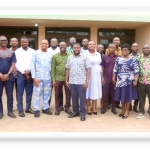
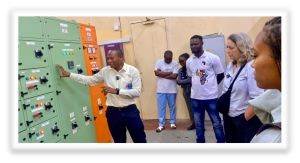
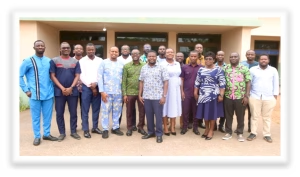
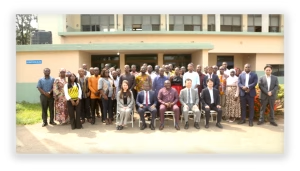
The Ghana Atomic Energy Commission (GAEC), on behalf of the Government of Ghana, hosted a high level Regional Taskforce Workshop on the implementation of IAEA regional projects earmarked for Africa at the Mensvic hotel in Accra.
The African Regional Cooperative Agreement for Research, Development and Training related to Nuclear Science and Technology (AFRA). Workshop took place from 23rd-27th March 2026, and brought together representatives from the International Atomic Energy Agency (IAEA), AFRA National Coordinators, Focal Points of Regional Designated Centres (RDCs), and delegates from several participating Member States.
The purpose of the workshop was to review, harmonize, and strengthen training fee structures across AFRA Regional Designated Centres in Africa, a critical step toward improving transparency, equity, and efficiency in the delivery of nuclear science and technology training programmes, which has arisen as a result of increasing demands for academic training, fellowships, and scientific visits under the IAEA Technical Cooperation Programme.
In a welcome statement, the Acting Director General of GAEC, Prof. Francis Hasford, expressed Ghana’s appreciation for the opportunity to host the strategic event, emphasizing the country’s commitment to advancing regional capacity building initiatives.
“Ghana remains firmly committed to supporting AFRA initiatives and advancing regional capacity building in nuclear science and technology. Through GAEC and our national institutions, including our role in hosting training programmes and supporting fellowship activities, we will continue to collaborate closely with the IAEA and Member States to expand opportunities for knowledge exchange and skills development across the continent” he said.
He noted that the meeting comes at a pivotal moment, as Member States collectively seek practical solutions for harmonizing training fees and improving access to high quality training opportunities across the continent.
“As demand continues to grow for long-term academic training, fellowships, and scientific visits across Member States, it has become increasingly important to ensure that training arrangements are transparent, equitable, efficient, and responsive to the needs of our institutions and beneficiaries” he added.
Prof Hasford stressed the importance of ensuring transparency, fairness, and sustainability in training arrangements, especially within the current global economic climate.
The Focal Point for AFRA at the International Atomic Energy Agency, Mr. Mickel Edwerd, in a brief remark, said that it was critical for this meeting to be held to ensure harmony across all the African countries.
He questioned the major disparities existing in the charges among African countries hosting similar programmes and called for a concerted effort to harmonize all the fees across the continent.
“There are so many people who want to pursue their masters and PhDs, but the high fees are preventing us from taking them. Charges in African countries are higher when compared to European or even Asian countries” he stressed.
The workshop provided a platform for participants to discuss best practices related to hosting fellowships and scientific visits, enhance coordination among AFRA RDCs, and strengthen institutional capacities to support the growing number of trainees across Africa.
Member States represented include Algeria, Egypt, Ethiopia, Ghana, Madagascar, South Africa, Tanzania, Tunisia, and Zambia.
By: CPRC/CCD