RAMSRI, GAEC embarks on health walk to create breast cancer awareness

The Radiological and Medical Sciences Research Institute (RAMSRI), in collaboration with the Ghana Atomic Energy Commission (GAEC) Hospital, has held a health walk as part of its breast cancer awareness campaign throughout the month of October.

The walk brought together management of staff of GAEC, representatives from other government agencies, non-governmental organisations, partners and political leaders who jointly embarked on the walk which was on the theme: “Uniting Our Voices and Taking Action”.

The walk began from the GAEC Hospital at Atomic with some brief aerobics, after which they marched through the principal streets of Dome-Kwabenya-Haatso accompanied by brass band music, and sharing flyers containing vital educative information on breast cancer.

They also carried along banners and placards with key information such as: “If you began menopause at an older age, you’re more likely to develop breast cancer” and “Changes in the Size, Shape or Appearance of your breast may be a symptom of breast cancer”.

Professor Dickson Adomako, the Deputy Director General of the Ghana Atomic Energy Commission (GAEC), in an interview with the media said, the health walk was to educate and create awareness about breast cancer.

He said breast cancer had been noted to be rising in recent years ahead of other cancers, therefore it was crucial for people to have periodic screening for early detection and treatment.

He emphasised that breast cancer was not for only women but also for men and encouraged them to also partake in the free screening programme within the month.

Prof. Adomako urged everyone to prioritise breast cancer screening and practice the necessary preventative measures.

He said it was amazing to see such a great number of GAEC staff, other associate institutions and stakeholders coming out to join the initiative to create awareness of breast cancer to help reduce the devastation that often robbed families of their loved ones.

Prof. Francis Hasford, the Director of RAMSRI, noted that increases in the yearly record of breast cancer cases were becoming alarming for humanity, hence the creation of the awareness months to educate the public on the disease and the need for early diagnosis.

He said, “we must encourage people to go for periodic screening to aid in early detection for early diagnosis.”

He explained that although females were highly predisposed to breast cancer than their male counterparts, some negative lifestyles like smoking, excessive drinking of alcohol and unhealthy foods also contributed to the onset of disease.

Professor Hansford said free health screen was on-going at the GAEC hospital in Accra, for throughout the month of October, and encouraged all to take the opportunity to screen for early detection.

Dr Nii Boye Hammond, the Medical Superintendent of the GAEC Hospital, said the walk was to advocate for early screening of breast cancer to prevent it from developing into a severe and fatal condition, and urged both men and women to have periodic checks.

He said breast cancer was curable if detected early, and said the hospital had been screening people since the beginning of the month to safeguard the health of Ghanaians.

“We also have screenings at market centres, lorry stations, shops and even for individuals who chance upon the screening process,” he added.

Dr Hammond said alongside the breast cancer screening and awareness creation, was also some education and services on Prostate cancer to heighten the need for men to undergo yearly screening for early detection, to prevent the onset of the devastating ailment that also plague men, leading to high fatality in Ghana and globally.
Source: GNA

GAEC prepares National Service Personnel for world of work

The Ghana Atomic Energy Commission (GAEC) yesterday organised a one-day preparatory workshop for the 2023/2024 National Service Personnel in Accra.

The workshop, organised by the Human Resources Directorate of GAEC in collaboration with the Organisation Development Institute (ODI), aimed to equip participants with essential skills for the world of work as they conclude their service with the Commission at the end of September this year.

The participants were taken through topics such as emotional intelligence, team work, and effective change management.

The Deputy Director of the Human Resources Directorate of GAEC, Mrs Emefa Awudi-Depkeh, in an interview, said the workshop was part of the Commission’s efforts to prepare the personnel for the challenges of the working world.

A cross-section of National service personnel at the workshop

“Every year, as the NSPs near the end of their service, we make a concerted effort to provide them with motivational talks and guidance to help them transition into the world of work. This year, we had the opportunity to collaborate with the Organisation Development Institute to enhance the skills of the service personnel,” she noted.

She urged the National Service Personnel to take advantage of every opportunity to expand their knowledge and skills, especially in a world where complacence and stagnation can lead to obsolescence. “We believe that this practical knowledge transfer will help them navigate their future careers and endeavours,” she added.

On his part, the President of the Organisation Development Institute, Prof. Nobel Kumawu, emphasised that emotional intelligence is crucial to professional success, particularly in areas such as leadership, effective communication, and teamwork.

He said that developing emotional self-awareness and compassionate skills are essential in managing workplace dynamics and building productive relationships.

“In a few days, these National Service Personnel will complete their service and enter the workforce. It is crucial for them to understand teamwork, as they will be joining unfamiliar teams. They must learn how to collaborate effectively, benefit from working with others, and gain valuable insights through these experiences,” he stated.

By CPRC/CCD

GAEC makes progress in research to control mosquito populations in Ghana

The Biotechnology and Nuclear Agriculture Research Institute (BNARI) of the Ghana Atomic Energy Commission (GAEC) has made significant progress in research to control mosquito populations in support of efforts to ultimately eliminate malaria in Ghana.

The Director of BNARI, Prof. Michael Osae, made this known on Tuesday during the 7th edition of the institute’s Malaria Awareness Campaign (MAC-7) and free screening, which took place at the Atomic down roundabout under the theme – “Health equity: a cornerstone for malaria elimination in Ghana.”

The event, which forms part of GAEC’s 60th anniversary, aimed to raise awareness about the importance of early detection and effective prevention strategies against malaria. It was also to commemorate this year’s World Mosquito Day on the theme “’Accelerating the fight against malaria for a more equitable world’.”

The Director of BNARI, Prof. Michael Osae getting screened at the BNARI Malaria Awareness Campaign

Prof. Osae said that the SIT a flagship project being developed by GAEC and its partners involves rearing and releasing many sterile male mosquitoes to control wild populations.

“The release of these sterile male mosquitoes will reduce the mosquito population because wild females mated by sterile males will not reproduce, lowering malaria transmission,” he added.

He explained that the ongoing research is focused on understanding the biology of male mosquitos, including their mating behaviours, to identify the optimal irradiation dosage that will effectively sterilise them while allowing them to survive and mate.

“We are currently working to determine the appropriate pilot size for this technology. This effort led our team to some islands on the Volta Lake to assess the mosquito diversity, population size and disease transmission in those areas” he noted.

On his part, the Deputy Director-General of GAEC, Prof. Dickson Adomako, thanked the staff of BNARI for sustaining the initiative over the years and commended members of the nearby communities and the public for availing themselves to acquire the knowledge necessary to protect them against malaria.

He encouraged them to take advantage of the free screening to discover any malaria infections before symptoms became severe. “If your test result is positive, seek treatment as soon as possible to minimize the risk of complications” he added.

BY: CPRC/CCD

GLOBAL COLLABORATION WILL HELP TRANSFORM GHANA’S HEALTHCARE SECTOR – PROF. ADOMAKO

The Deputy Director-General of the Ghana Atomic Energy Commission (GAEC), Prof. Dickson Adomako, says collaborations and innovations at local and international levels can help improve Ghana’s healthcare sector from its current level.

He emphasized that the global response to COVID-19 has demonstrated the importance of pooling and sharing resources such as medical equipment, specialist facilities, and expertise when addressing health challenges.

“The past few years have highlighted the world’s interconnectedness. COVID-19 demonstrated how health challenges in one region can quickly become global issues affecting everyone. This reality emphasizes the need for collaboration, innovation, and solidarity in addressing these challenges” he said.

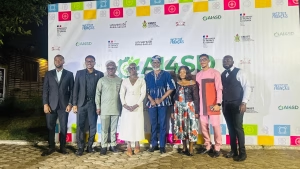
A group picture of the participants at the Global Health Catalyst Summit, Ghana.

Prof. Adomako made these remarks at the inaugural Global Health Catalyst (GHC) Summit in Accra, organized through collaborations between the Global Health Catalyst USA, University of Pennsylvania, GAEC, the University of Ghana, Kwame Nkrumah University of Science and Technology, Korle Bu Teaching Hospital, Komfo Anokye Teaching Hospital, Peace and Love Hospital, and the Sweden Ghana Medical Centre.

The summit brought together leading health experts, researchers, advocacy groups, and government officials to discuss and collaborate on advances in global health, focusing on cancer care and treatment in Ghana.

He noted that Ghana has made significant progress in improving and managing cancer-related cases, combating infectious diseases, and improving maternal and child health. “However, more work remains to be done to improve Ghanaians’ overall health status ” he added.

He encouraged participants to share actionable concepts and ideas for addressing difficult health issues, improving care quality, and strengthening Ghana’s health systems.

One of the Global Health Catalyst Directors, Prof. Steven Avery, stated that the summit’s purpose was to bring people together to collaborate and find solutions to global health issues.

“Not just scientists, but also religious leaders, community leaders, policymakers, and government officials are involved. The primary goal is not merely to convene and discuss the problem, but to collaborate on generating solutions” he said.

Prof. Avery stated that the summit was simply a stepping stone to future projects in Ghana, adding, “We are excited about the time we spent here and the many projects that we have in mind. We intend to establish Ghana as an African center of excellence, serving as a training, education, and research hub for regional countries.”

On his part, the Director of the Radiological and Medical Sciences Research Institute (RAMSRI) of GAEC, Prof. Francis Hasford, expressed his gratitude for the GHC collaboration and the various projects that have emerged.

A panel of experts delivering their presentations at the Global Health Catalyst Summit, Ghana.

“Out of this collaboration, Ghana is actively pursuing CAMPEP accreditation in medical physics. Additionally, efforts are underway to establish an AI Centre of Excellence in Ghana with the goal of transforming the training of medical physicists, biomedical engineers, and other professionals. There are also plans to establish an International Centre for Global Health Research” he added.

The summit witnessed quality conversations and panel discussions from high profile speakers including, Prof. Elsie Effah Kaufmann and Prof. Raymond Atuguba of the University of Ghana, Prof. Joel Yarney and Prof. Verna Vanderpuye of the Korle-Bu Teaching Hospital, Dr. Eric Addison of Komfo Anokye Teaching Hospital, Prof. Edem Sosu and Prof. Francis Hasford of the Ghana Atomic Energy Commission.

Other speakers included Prof. Stephen Avery and Prof. Shannon O’Reilly of the University of Pennsylvania, Prof. David Pate of the University of Wisconsin – Madison, Dr. Laurence Court of the MD Anderson Cancer Centre, and Prof. Afua Yorke of the University of Washington.

Also on the panel were Prof. Mary Boadu, Dr. Theodosia Adom and Dr. Theophilus Narh of GAEC, Dr. Beatrice Wiafe Addai of Peace and Love Hospital, Dr. Ignatius Awinibuno of the Ministry of Health, and Dr. Klenam Dzefi-Tettey of Korle Bu Teaching Hospital.

BY: CPRC/CCD

United States and Ghana Advance Cooperation on Clean, Secure, Safe and Reliable Nuclear Energy

Accra, Ghana – U.S. Principal Deputy Assistant Secretary of State for International Security and Nonproliferation Ann Ganzer announced new civil nuclear cooperation to further support Ghana’s safe and secure use of nuclear power, including establishing Ghana as a small modular reactor (SMR) regional hub. The announcements were made at the Africa Nuclear Business Platform meeting in Accra, Ghana on May 28.

SMRs can provide 24/7 reliable power, complement other clean energy sources, have flexible siting requirements, and use a small land area. U.S. SMRs incorporate advanced safety features, including designs to withstand extreme weather and seismic events, and can be tailored to match the specific needs of a country’s power grid, with the ability to scale up as needed. Importantly, SMRs can play a critical role in decarbonizing nonelectric sectors, such as industry and transportation.

Principal Deputy Assistant Secretary of State for International Security and Nonproliferation Ann Ganzer joins industry and government representatives at the MOU signing ceremony (May 28, 2024)

Joined by U.S. Charge d’Affaires Rolf Olson, PDAS Ganzer attended the signing of key arrangements facilitated by the U.S. Foundational Infrastructure for the Responsible Use of Small Modular Reactor Technology (FIRST) Program, to advance the safe and secure deployment of a U.S. SMR in Ghana:

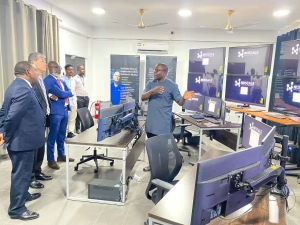
  • Memorandum of Understanding and Contractual Arrangements for the Provision of the NuScale Energy Exploration (E2) Center and related services at GAEC. The documents, signed by GAEC and ISTC and by GAEC, ISTC and NuScale, respectively, advance Ghana’s technical readiness for SMR technology. The deployment of a NuScale E2 Center in Ghana — a first for the African continent — will be a key tool for preparing the workforce for SMR deployment in Ghana and beyond.
  • The E2 Center, a simulator of NuScale Power’s SMR control room funded by the FIRST Program, will provide a hands-on training facility to develop and train the next generation nuclear operators and engineers.
  • It will also establish Ghana as a regional educational and training hub for the next stage of safe and secure civil nuclear deployments in Africa, consistent with International Atomic Energy Agency (IAEA)’s Milestones Approach and nonproliferation standards.
  • Memorandum of Understanding for a Regional Welding Certification Program between the Ghana Atomic Energy Commission (GAEC) and the International Science and Technology Center (ISTC), which will provide essential training and a unique skillset to enable Ghanaian technicians to qualify for construction jobs in the nuclear energy sector. Funded by the FIRST Program, this certification program will help to establish Ghana as part of a safe and secure SMR supply chain in the region.

In conjunction with these significant developments, the Government of Ghana represented by Nuclear Power Ghana is working on a cooperation agreement with the project developer Regnum Technology Group LLC to develop an industrial enclave utilizing NuScale SMR nuclear power plant as its main source of energy. The U.S. government strongly supports the deployment of NuScale’s technology through Regnum Technology Group as a project developer in Ghana and looks forward to seeing the conclusion of this agreement.

The United States is also currently in negotiations with Ghana for a peaceful nuclear cooperation agreement (or 123 agreement) and looks forward to concluding negotiations to enable closer cooperation in this important field.

Today’s announcements build on the U.S., Japan, and Ghana commitment announced at the 2022 International Atomic Energy Agency Nuclear Power Ministerial to work together to support Ghana’s intent to be the first operator of SMRs in Africa and build jobs through workforce development to support future SMR supply chain needs. The United States is committed to enabling the use of innovative clean energy technologies to enhance global access to zero emission, reliable 24/7 power and to support sustainability, energy security, and climate goals.

Source: U.S Embassy Ghana

CTBTO Executive Secretary to visit Ghana as part of West African tour

The Executive Secretary of the Comprehensive Nuclear-Test-Ban Treaty Organization (CTBTO), Dr. Robert Floyd, will visit Ghana from June 2 to 5, 2024, as part of a multi-country tour of selected West African countries.

The visit is aimed at strengthening international cooperation on nuclear non-proliferation and promoting the global effort to achieve a comprehensive ban on nuclear tests.

Executive Secretary of the Comprehensive Nuclear-Test-Ban Treaty Organization (CTBTO), Dr. Robert Floyd

During his two-day visit, Dr. Floyd will pay courtesy calls to several government agencies, including the Ghana Atomic Energy Commission (GAEC), the Ministry of Environment, Science, Technology, and Innovation (MESTI), and the Ministry of Foreign Affairs and Regional Integration (MoFARI).

This will be followed by a public lecture to stakeholders, including policymakers, academics, the security services, and the public, on Tuesday, June 4, 2024, at the Graduate School of Nuclear and Allied Sciences (SNAS) of the University of Ghana, GAEC, to offer a better understanding of the CTBTO’s mission and the relevance of the treaty to global security.

The Comprehensive Nuclear-Test-Ban Treaty Organization (CTBTO) was established to ensure that States that sign and ratify it refrain from conducting nuclear explosions, including nuclear weapons tests.

Ghana signed the CTBT in 1996 and therefore has set up a CTBT National Data Centre (NDC) at the Ghana Atomic Energy Commission to help with international efforts to better monitor nuclear weapons test explosions around the world.

By: CPRC/CCD

Isotope Hydrology Training: GAEC calls for collaboration for sustainable management of Ghana’s water resources

The Director of the National Nuclear Research Institute (NNRI) of the Ghana Atomic Energy Commission (GAEC), Dr. Samuel Yao Ganyaglo, has called on stakeholders to build synergy to preserve water resources to avert the threat of water scarcity in the country.

He made the call on Tuesday at the opening session of a five-day isotope hydrology training organized by the Water Resources Research Centre of NNRI at Kwabenya in Accra.

The training is aimed at advancing water sustainability efforts in Ghana. It brought together participants from GAEC, the Soil Research Institute of the Council for Scientific and Industrial Research and the Water Resources Commission, an International Atomic Energy Agency (IAEA) fellow from Rwanda, as well as postgraduate students from University of Ghana and Kwame Nkrumah University of Science and Technology.

According to Dr. Ganyaglo, sustainable water management cannot be the responsibility of a single institution but should be a collaborative effort among stakeholders in leveraging their strengths to meet the water needs of the present without compromising the ability to meet the needs of future generations.

“We should learn to identify and utilize each institution’s unique strengths because some are good at conventional technologies while others are good at nuclear technologies. By bringing these institutions together, we can create a team dedicated to the sustainable management of our water resources,” he added.

He asserted that water scarcity poses a significant threat to the nation’s development and the well-being of its citizens, and he added that collective action must preserve water resources for future generations.

” To effectively address this issue, we must work together as a team, pooling our resources, expertise, and knowledge for sustainable exploitation of our water resources,” he underscored.

Dr. Ganyaglo urged the participants to take the lessons seriously, utilize the knowledge they would acquire on isotope hydrology, device mechanisms or measures to exploit water sustainably and work together to help preserve the country’s water resources. “Thus, making water adequate for future generations to depend on,” he added.

Among the topics to be treated are data analysis and analytical methods using laser spectrometry, an introduction to stable isotope hydrology, water sampling for isotope analyses, dating groundwater with carbon-14 and tritium for recharge studies, and Bayesian models for contaminant tracing in water, among others.  The training program is being organized by the Water Resources Research Centre of the Ghana Atomic Energy Commission.

By: CPRC, CCD

Ghana and China to co-operate on HPR 1000 nuclear project

Nuclear Power Ghana (NPG) and China National Nuclear Corporation (CNNC) Overseas Limited signed a cooperation and framework agreement on the margins of the 26th World Energy Congress in Rotterdam for the construction of a HPR-1000 (Hualong One) Nuclear Power Project and the upgrade of Ghana’s grid. Ghana restructured its nuclear programme in 2008 to meet the expected increase in energy demand. Nuclear Power Ghana was established in 2018 as the Owner/Operator of Ghana’s first proposed NPP.

Based on support from the International Atomic Energy Agency (IAEA), several countries have expressed interest in assisting Ghana in the development of its nuclear power programme, including China which has long-standing cooperation with Ghana in the fields of energy and commerce.

Image: Ghana’s Energy Minister, Dr Matthew Opoku Prempeh and President of CNNC, Yu Jianfeng at the signing ceremony (courtesy of Nuclear Power Ghana)

Speaking at a pre-agreement signing ceremony, Energy Minister, Dr Matthew Opoku Prempeh said the agreement represents a profound commitment to advancing Ghana’s energy sector, ensuring sustainable development, and meeting the growing demand for electricity. “Ghana is at a crucial juncture in its journey towards economic prosperity, and thus, the integration of nuclear power into our energy mix will play a pivotal role in achieving our goals,” he said.

CNNC President Yu Jianfeng commended the Minister for his leadership in the collaboration. “Any time we meet the Minister, we meet new energy and so I have no doubt that this agreement will yield fruits,” he said. NPG said the Government of Ghana continue to support the Ghana Nuclear Power Programme, which is under the Power Directorate at the Ministry of Energy by its active participation and funding.

Yu and Prempeh previously met during in December 2023 during the 28th United Nations Climate Change Conference (COP28) in Dubai. The two then reviewed successful experiences of collaboration in microreactor projects and the conversion of miniature neutron source reactors. They also discussed their shared vision for further nuclear cooperation.

Source: Nuclear Engineering International

Clinical Training in Diagnostic Radiology underway in Accra

A six-month clinical training to enhance diagnostic radiology skills for medical physicists from Tanzania, Uganda, Sudan, and Namibia has commenced in Accra.

Dubbed the “Technical Cooperation Group Fellowship on Clinical Training for Medical Physicists in Diagnostic Radiology,” it provides fellows with specialized training in the medical application of radiation physics to evaluate practices that involve medical exposure and optimize the physical aspects of diagnostic and therapeutic procedures in terms of benefits and risks.

It also forms part of efforts by the International Atomic Energy Agency (IAEA) to address the shortfall of clinically qualified medical physicists with specialties in Africa.

The program is being hosted by the Medical Radiation Physics Center of the Radiological Medical Sciences Research Institute (RAMSRI) at the GAEC for the third time since 2019 under the auspices of the IAEA.

A cross-section of participants at the opening of the training.

Among the topics to be treated are mammography, computed tomography, fluoroscopy, interventional radiology, dental X-rays, magnetic resonance imaging, and ultrasound.

Speaking at the opening of the training, the Director-General of GAEC, Prof. Samuel Boakye Dampare, said that the training is one of the projects launched by the IAEA to enhance the capacity building of medical physicists to improve the safety and effectiveness of medical imaging.

“This is after the IAEA, through its programmes, identified a huge gap in the shortage of clinically qualified medical physicists in diagnostic radiology and nuclear medicine in Africa,” he stated.

Prof. Dampare, who is also the National Liaison Officer (NLO) for IAEA in Ghana, explained that the project is being implemented under the African Regional Cooperative Agreement for Research, Development, and Training Related to Nuclear Science and Technology (AFRA) cooperation framework.

“Its objective is to improve the overall safety and effectiveness of nuclear medicine and diagnostic radiology services in Africa through dose optimization and an appropriate quality assurance program conducted by medical physicists,” he said.

He indicated that, in pursuit of the project’s objective, the IAEA provided dosimetry laboratory equipment to some African member states to aid in measuring the radiation dose of persons exposed, as well as awarded fellowship training to 24 medical physicists in diagnostic radiology and nuclear medicine.

“These fellows, in 2021, were trained in three selected training centres: Ghana, Egypt, and Algeria, for a period of six months. Last year, Ghana hosted eight fellows from five African member states, namely Ethiopia, Kenya, Morocco, Sudan, and Tanzania, for a period of six months,” he stated.

Prof. Dampare expressed gratitude to the IAEA for the unwavering technical assistance to its African member states, which he said was crucial in helping member states acquire the requisite knowledge and skills in the application of nuclear energy for peaceful purposes.

He urged the participants to be agents of change to ensure the quality of care and improved patient outcomes, and transfer the knowledge they would acquire to their colleagues back home to help improve their professional competencies.

On his part, the Director of RAMSRI, Prof. Francis Hasford, commended the IAEA for the confidence it has reposed in the Institute to offer training in the field of medical physicists to its fellows for the third time since 2019.

“We see this as a great opportunity presented to us to enrich the skills of our African brothers and sisters, and we believe that the training will add value to their medical physics competencies,” he said.

The course supervisor, Dr Theophilus Sackey, complimented the participants for selecting Ghana as their preferred training destination.

He admonished them to keep and update their portfolios throughout the training, which he said was crucial. “A completed test and the procedures used to obtain the desired results must be documented and presented to the course facilitator to countersign. This will be a very useful document when you get back to your country,” he noted.

By CPRC,CCD

GAEC, French Embassy, others partner to train scientists in computer software

The School of Nuclear and Allied Sciences (SNAS) of the Ghana Atomic Energy Commission (GAEC) has partnered with the French Embassy to train scientists and technicians in the Geant4 Monte Carlo Simulation Toolkit in Accra.

The Geant4 Monte Carlo Simulation Toolkit, a computer software, is used in scientific disciplines such as nuclear and accelerator physics, medical physics, and space science to understand the behaviour of particles in a variety of virtual situations without having to rely solely on expensive and time-consuming real-world experiments.

The five-day workshop organized for researchers, students, and professionals at the conference hall of SNAS from March 18–22, 2024, has the University of Paris Saclay and the Centre National de la Recherche Scientifique (CNRS) as other partners to ensure the successful dissemination and sharing of knowledge and skills on the software.

Addressing the participants at the opening ceremony, the Director-General of GAEC, Prof. Samuel Boakye Dampare, emphasized that the program resonated with GAEC’s vision of enhancing the computational skills of its technical and scientific staff.

“The Commission is particularly proud to be a collaborator on this project, as the project’s objective of equipping scientists and technicians in Ghana with relevant computational skills is very much in line with GAEC Management’s vision for its staff,” he said.

Prof. Dampare stated that the Commission’s research efforts over the years have had a significant impact on the nation in critical sectors such as health, food safety, agriculture, and the oil and gas sector.

He indicated that leveraging software tools like Geant4 would further enhance GAEC’s contribution to the socio-economic development of Ghana.

“We look forward to making more modern tools available to the global scientific community, including resorting to computer coding and simulations, especially in the era of the ascendency of artificial intelligence and improved computing power,” he added.

The project coordinator from the University of Paris Saclay, Dr. Daniel Adjei, stated that the launch of the Geant4 program in Ghana in 2022 was the first of its kind in Africa.

He noted that the workshop was made possible through GAEC’s show of interest and urged the participants to seize the opportunity to enhance their careers.

“By staying true to your shown interest, we are here again with the main developers of this code, through funding from the University of Paris Saclay, under the framework of the Direction des Relations et Internationales Européennes (DRIE). We have no other option than to take full advantage of this to make a career out of it and/or to use this powerful tool in our contemporary research,” he said.

One of the instructors leading the training session, Prof. Marc Verderi, Spokesperson of Great4, expressed gratitude to the participants for their keen interest in mastering the Geant4 Monte Carlo Simulation and assured them that they would be provided with hands-on practical training throughout the session.
“I encourage you to ask questions so that by the end of the training, you will be well-equipped to use the Geant4 toolkit,” he added.

By: CPRC, CCD