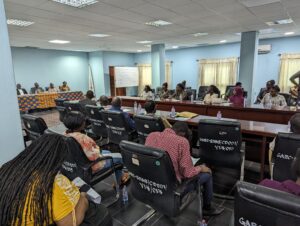
Stakeholders Discuss Ghana’s Nuclear Power Programme tomorrow

The government, media, academia, industry, and the general public will discuss the state of Ghana’s nuclear power program tomorrow at the Nuclear Power Forum at the Accra International Conference Centre.

Ghana is in phase II of its Nuclear Power Programme (NPP), and the forum seeks to provide stakeholders with an update on the status of Ghana’s nuclear power infrastructure development.

It will also serve as an opportunity for stakeholders to gain first-hand knowledge of the pre-and post-Fukushima experiences of the Japanese nuclear industry.

The forum is being organized by the Nuclear Power Institute (NPI) of the Ghana Atomic Energy Commission (GAEC) on behalf of the Ghana Nuclear Power Programme Organization (GNPPO) on the theme “Learning from the Japanese Nuclear Experience”.

The GNPPO is the technical workforce and advisory body responsible for coordinating the nuclear power program. Three key organizations constitute the GNPPO: the Nuclear Power Institute, which is responsible for providing technical know-how and support; Nuclear Power Ghana, which is the owner and operator; and the Nuclear Regulatory Authority, which is the regulator. It is chaired by the Ministry of Energy.

The forum, which will be streamed live on the social media accounts of GAEC, forms part of technical cooperation with the Japanese Government through the JAIF International Corporation Centre (JICC). It has seen about 450 participants trained virtually in the last 12 months.

According to the Director of NPI, Prof. Seth Kofi Debrah, the Japanese government continues to explore the opportunities nuclear power has to offer them because of its enormous benefits to the country’s development.

“That should tell us the critical role of nuclear power, and I’m certain that once nuclear power comes online to augment Ghana’s energy mix, it will help boost the country’s industrialization agenda,” he added.

“In order to educate stakeholders on Ghana’s nuclear power program and help them understand the tremendous advantages it has to offer; key topics have been carefully selected for discussion at the forum. We also hope to draw some valuable lessons from the Japanese nuclear industry”, Prof. Debrah stressed.

The topics for discussion at the forum include Ghana’s energy transition, the status of Ghana’s nuclear infrastructure development, and the socio-economic benefits of nuclear power—the Japanese Experience.

The rest are radioactive waste management in Japan, the Japanese nuclear power industry and experience.

Some key personalities to participate in the forum include the Minister of Environment, Science, Technology, and Innovation (MESTI); the Minister of Energy; and the Minister of Foreign Affairs and Regional Integration, as well as the U.S. and Japanese Ambassadors to Ghana.

CPRC/CCD, NPI

Clinical training to address shortage of Imaging Medical Physicists opens in Accra

A fellowship on clinical training in nuclear medicine to address the shortage of Imaging Medical Physicists in Africa was opened in Accra last Tuesday.

This comes on the heels of the maiden fellowship held in 2021, after a study conducted by the International Atomic Energy Agency (IAEA) and the Federation of African Medical Physicists Organization (FAMPO) revealed that Africa has only 200 imaging medical physicists instead of the over 4,000 needed to serve the continent.

The six-month fellowship being hosted by the Radiological and Medical Sciences Research Institute (RAMSRI) of the Ghana Atomic Energy Commission (GAEC) and the Nuclear Medicine Department of the Korle-Bu Teaching Hospital with sponsorship from the IAEA brings together eight participants from five African countries: Ethiopia, Kenya, Morocco, Sudan, and Tanzania.

The fellowship aims at strengthening and sustaining medical imaging services in Africa through academic education programs and clinical training, as well as effective diagnostic and interventional radiological practices to ensure healthy lives and promote the wellbeing of everyone.

The Director-General of GAEC, Prof. Samuel Dampare (second left), and other dignitaries at the event.

Addressing the participants at the opening ceremony, the Director-General of GAEC, Prof. Samuel Dampare, announced that the fellowship starts on April 3, 2023, and ends on October 3, 2023.

He explained that several studies by the IAEA showed that even though there were medical physicists at the Radiotherapy Centres in the member states of the African Regional Cooperative Agreement for Research, Development, and Training Related to Nuclear Science and Technology (AFRA), the same could not be said of Nuclear Medicine and Diagnostic Radiological Centres. “As a result, a task force group was setup to put together a training curriculum that was later harmonized for academic and clinical training in medical physics in Africa,” he added.

“Currently, 11 countries, namely Ghana, Nigeria, South Africa, Kenya, Algeria, Egypt, Libya, Morocco, Sudan, Tunisia, and Zimbabwe, have academic programs in this regard,” he indicated.

He admonished the participants to help their countries develop the competencies needed in nuclear medicine physics with the knowledge and experiences they would gain at the end of the fellowship.

“This is a very great opportunity provided by the IAEA, and I would want to encourage you all, fellows, to make the best out of the situation,” he added.

The Director of RAMSRI at GAEC, Prof. Francis Hasford, reiterated the importance of the training to equip medical physicists with the needed competencies to become clinically qualified to practice independently in one or more of the subfields of medical physics.

Prof. Hasford, who is also the project scientific consultant, said the participants would be taken through 10 key areas. They are clinical awareness, performance testing of imaging equipment, radiation protection and safety, dosimetry instrumentation and calibration, and patient radiation dose audit.

The rest are image quality assessment, optimization of clinical procedures, technological management in nuclear medicine, radioactivity measurements and internal dosimetry, and performance testing of nuclear medicine equipment.

The fellowship supervisor, Dr. Theophilus Sackey, on his part, mentioned that there were a lot of expectations for the participants during the fellowship. He urged them to network among fellows and experts, gain knowledge of the harmonized protocol for quality control in nuclear medicine, and publish their works at the end of the fellowship, among other things.

By CPRC/CCD, GAEC

GAEC-BNARI to Inaugurate Experimental Hut Station for Innovative Malaria Vector Research

The Biotechnology and Nuclear Agriculture Research Institute (BNARI) of the Ghana Atomic Energy Commission (GAEC) is set to inaugurate an experimental hut station for innovative research in managing malaria-transmitting mosquitoes in a rural community in the Ashanti Region of Ghana.

The experimental hut station, which is located at Atatem in the Adansi Asokwa District, is a simplified model of an indigenous home, built to World Health Organization (WHO) standards that will allow researchers to test the efficacy of insecticides used in indoor residual spray (IRS) and long-lasting insecticidal nets (LLINs) to kill disease vectors such as Anopheles gambiae and Anopheles funestus.

The Director of BNARI, Dr. Michael Osae, made this known yesterday when he interacted with communication personnel to announce a host of activities earmarked for the 2023 annual GAEC-BNARI Malaria Awareness Campaign (MAC-2023) slated for 9th May 2023.

Director of BNARI, Dr. Michael Osae

According to Dr. Osae, the decision to establish the hut in the Atatem community stems from prior research, which indicates that mosquito vectors of malaria are prevalent and highly resistant to insecticides. Premised on this fact, he said there is a good foundation for siting the experimental hut to test new vector control tools being developed against resistant vectors.

“Mosquito nets would be hung in the experimental hut to collect mosquitoes for the test. The mosquitoes will then be examined to determine the effectiveness of vector control tools like treated nets and insecticide sprays,” he added.

Dr. Osae stated that the experimental hut station is a highly effective way to eliminate non-responsive control measures and validate new and appropriate interventions to help control disease-transmitting mosquitoes.

“This project was established in collaboration with the Center for Research in Infectious Diseases in Cameroon through a Bill and Melinda Gates Foundation grants. The Center for Research in Infectious Diseases of Cameroon were awarded a Bill & Melinda Gates Foundation grant to study mosquito insecticide resistance and its impact on vector control tools across Africa. The participation of Ghana in the project enabled GAEC to be given a sub-grant to carry out this component,” he added.

Shedding light on some key activities of the awareness campaign, Dr Osae said that apart from the commissioning of the experimental hut station, there would be an awareness talk to educate community members in Atatem and its environs on malaria prevention and control.

He also indicated that there would be a free health screening exercise and distribution of free mosquito repellents for residents.

By: CPRC/CCD, GAEC

GHANA ATOMIC ENERGY COMMISSION (GAEC) PARTNERS EU, IAEA AND THE UNITED NATIONS INTERREGIONAL CRIME AND JUSTICE RESEARCH INSTITUTE TO FIGHT ORGANIZED CRIMINAL ACTIVITIES

The GAEC in partnership with the European Union, the United Nations Interregional Crime and Justice Research Institute (UNICRI) and the International Atomic Energy Agency (IAEA) have organized a 3-day workshop on organized criminal activities using Nuclear and other Technologies in Accra.

The workshop was focused on the Prevention, Detection and Response to Chemical, Biological, Radiological and Nuclear (CBRN) Terrorism.  It was designed to discuss the role that technology solutions play on organized criminal activities that breach the integrity of the supply chain. With particular emphasis on collecting feedback from CBRN experts, law enforcers, forensic and supply chain technology experts.


It was also to help identify needs of operators in the field and the ways in which technology can support their activities for the monitoring, prevention and investigation of illegal activities related to CBRN terrorism and criminal infiltrations of the supply chain.

Participants in the workshop on organized criminal activities using Nuclear and other Technologies.

The Minister of Environment, Science, Technology and Innovation, Dr. Kwaku Afriyie, who gave the keynote address, noted that in the west African sub-region, organized criminal activities are known to have had influences in fake medicines, illegal mining, illegal fishing, fuel adulteration and smuggling sectors.

“Left unresolved, the threats posed by these activities can have devastating consequences not only in terms of human lives, but also in terms of economic and social stability”, he added.

The Minister emphasized that prevention is the foremost objective in the fight against malicious or criminal activities involving CBRN. “It is the key to addressing the threats posed by CBRN terrorism and organized criminal activities” he added.

He indicated that technologies such as radiation detection systems, biometric scanners, and chemical sensors can be deployed around the world as one of the most effective ways to prevent these threats.

Dr. Kwaku Afriyie added that detection and response which involves the use of technologies such as remote sensing, imaging systems, and mobile laboratories as well as drones, robots, and autonomous vehicles can be used to respond to threats quickly and safely in areas that are difficult to access.

He concluded by saying that Ghana’s efforts to prevent, detect and respond to organized crime requires technology and proactive collaboration between government agencies, private industry, civil society organizations and academic and research institutions.

The Deputy Director General of the Ghana Atomic Energy Commission, Prof. Dickson Adomako, who represented the Director General, Prof. Samuel Boakye Dampare, said that Ghana has a rich history with the United Nations and the International Atomic Energy Agency on collaborations to drive research, development, human resource capacity building and safety and security matters.

“We are therefore happy to be hosting this 3-day United Nations Interregional Crime and Justice Research Institute workshop, which has brought together experts from around the world” he added.

Prof. Adomako revealed that the prospect of non-state actors including terrorists gaining access to and using Chemical, Biological, Radiological and Nuclear materials is a serious threat to international peace and security.

“The activities of such groups are on the rise and more effort is needed to address this kind of injustice to humanity” he said.

He was particularly happy that this workshop is being organized in Ghana to discuss measures to curtail these criminal activities due to reports of the ascendency of terrorism and organized crime activities in Africa.

“I know that experts will give us more examples of CBRN terrorism and organized crime activities during this workshop” he added.

Participants were drawn from Ghana, Cote d’Ivoire, Liberia, Nigeria, and Sierra Leone with particular emphasis on CBRN terrorism experts as well as customs and law enforcement officers with expertise on different forms of illicit trade (related to trafficking in illicit pesticides, fuel frauds, precious metals trafficking, illegal, unreported, and unregulated (IUU) fishing and forensic and supply chain technology experts.

By: Communication and Public Relations Center, GAEC


25% mosquito breeding sites identified as source of malaria transmission at Kwabenya – GAEC

Research conducted by the Biotechnology and Nuclear Agriculture Research Institute (BNARI) of the Ghana Atomic Energy Commission (GAEC) has revealed that 25% of mosquito breeding sites in the Kwabenya area are home to Anopheles mosquitos, the main vectors of malaria.

Breeding sites around GAEC Community, Kwabenya-Musuku, Narhman (Bohye), and Kwabenya itself are among the 25% identified.

The Director of the Biotechnology and Nuclear Agriculture Research Institute (BNARI) of the Ghana Atomic Energy Commission (GAEC), Dr. Michael Osae, made this known when he shared the findings with the students and teachers of GAEC Basic School at GAEC’s annual Malaria Awareness Campaign at Kwabenya in Accra.


The research exercise began on April 28, 2022, and ended on May 10, 2022, as part of the one-month-long activities that marked the 2022 edition of the Malaria Awareness Campaign, which ended on May 31, 2022, with a public lecture on “Malaria and Malaria Mosquitoes”.

According to Dr. Osae, the study shows that the residents of Kwabenya and its environs are at risk of malaria because the mosquito species identified are competent vectors of human malaria.

“The remaining 75% of breeding sites were home to Culex and Aedes mosquitoes, also known as nuisance mosquitoes, which do not transmit malaria but do transmit other diseases that are not present in the country. They can, however, transmit yellow fever,” he explained.

Dr. Osae, therefore, recommended that residents of Kwabenya desilt the gutters, spray the mosquito breeding sites to kill the mosquito larvae, and, where applicable, get rid of the mosquito breeding sites entirely.

In another study conducted by BNARI during the same period on mosquito net ownership and usage in the Kwabenya community, Dr. Osae said it was found that 51% of the people do not have treated nets and only 63% of those who do sleep under them.

“We must all change our attitude towards how we think about mosquitoes and malaria. Your treated mosquito nets are not meant to fence your hencoop; please sleep in them to prevent malaria,” he stressed.

Speaking on the theme for the campaign “Harness Innovation to Reduce Malaria Disease Burden and Save Lives,” Dr. Osae said innovations have led to the development of a World Health Organization-approved Long-Lasting Insecticide Nets, which he described as “one of the best ways of preventing malaria as the net establishes a physical and chemical barrier against mosquitoes.”

On her part, the Municipal Chief Executive (MCE) of the Ga East Municipal Assembly, Hon. Elizabeth Kaakie Mann, said malaria remains a life-threatening disease, causing more than one million deaths each year.

She urged the public to avoid mosquito bites and reduce their risk of contracting malaria by keeping their surroundings clean and sleeping under treated mosquito nets.

“I will also recommend, especially to those who have not signed onto the National Health Insurance Scheme (NHIS), to do so as soon as possible since the scheme provides cover for malaria services at a low cost for holders of an NHIS card,” she added.

The campaign is an annual event that is aimed at empowering communities toward malaria prevention and control and helping solve the problem of malaria through research-driven solutions.

By Exornam Awudi & Raymond K. Baxey, CPRC/CCDContinue reading

IAEA Expert on nuclear technology for managing plastic waste visits Ghana

Dr. Chantara Thevy Ratnam, an International Atomic Energy Agency (IAEA) expert in Polymer Technology, is in Ghana on a fact-finding mission from May 16 to 20, 2022, to assess a project plan to manage plastic waste using nuclear technology.

Dr. Chantara Thevy Ratnam (IAEA Expert)

The project under the Technical Cooperation project of IAEA is dubbed: “NUTEC Plastics”, an initiative by the Ministry of Environment, Science, Technology and Innovation’s (MESTI) efforts, through the Ghana Atomic Energy Commission (GAEC) to tackle the menace of plastic waste in the country.

During her 5-day visit, Dr. Ratnam will meet with government officials, the project team    and tour selected laboratories at GAEC. This would be followed by a workshop with selected stakeholders in plastic production and waste management industry on Reutilizing and Recycling Polymeric Waste through Radiation Modification for the Production of Industrial Goods.

Dr. Harriet Danso-Abbeam, the project counterpart who is also a Senior Research Scientist at GAEC explained that the IAEA expert would tour some existing plastic recycling plant facilities as part of her activities.

“Ghana is one of four African countries that have been chosen by the IAEA to implement this project. The three other countries are South Africa, Kenya, and Morocco,” she added.

By Raymond K. Baxey & Mark Sarfo, CPRC/CCD


GAEC and Petroleum Commission explore areas of collaboration

The Ghana Atomic Energy Commission (GAEC) and the Petroleum Commission (PETROCOM) have met to explore how to collaborate on areas of mutual interest.

At a meeting between the authorities of the two institutions in Accra, the Director-General of GAEC, Prof. Samuel Boakye Dampare, said the visit was an opportunity for the two institutions to strengthen ties; “We can collaborate to manage naturally occurring radioactive materials (NORM) during oil exploration to avert any radiological health hazards to people and the environment.” We can also look at the use of non-destructive testing (NDT) to prevent defects and potential leaks in oil pipelines and tankers.

On his part, the Chief Executive Officer of PETROCOM, Mr. Egbert Faibille Jnr., noted that there was a compelling need for collaboration between the two commissions, and that the recent Appiatse disaster in the Western Region had highlighted the need for a stricter regime in the handling of such radiation.

“And so, you are right in saying that there are naturally occurring radioactive materials (NORM) and other related dangers during oil exploration that have to be dealt with in a controlled environment,” he said.

He called for collaboration in the decommissioning of the Saltpond Oil Field, which he said entails a number of issues, one of which he indicated as the subsea production system containing NORM that must be controlled. “Our concern is that nothing dangerous should escape into the environment during the decommissioning. We need to protect the flora and fauna for our aquaculture and the people who will work on it,” he added.

Mr. Faibille Jnr. also mooted the idea of a centre of excellence that would serve as a one-stop shop for the training of the middle-level workforce and technicians in petroleum and nuclear energy that can compete in any part of the world.

Other topical issues that took center stage during the meeting of the two commissions were nuclear power, localization, training, and capacity building.

By Raymond K. Baxey, CPRC/CCD


GAEC Boss urges young women to pursue careers in TVET trades

The Director-General of the Ghana Atomic Energy Commission (GAEC), Prof. Samuel Boakye Dampare has urged young women to pursue Technical and Vocational Education and Training (TVET) to improve their chances of finding work.

According to the Director-General, there is a high demand for skilled labor, but many young women are not drawn to the sector due to misguided perceptions and the sector being dominated by men.

Prof. Dampare made these remarks during an orientation for young women participating in the Young African Works (YAW) strategy initiative in TVET programmes at the GAEC in Accra to kick-start a two-month skills development in ICT with technical support from the GAEC for the CAMFED.

He urged them to take advantage of such skill development initiatives to gain employable skills that would help reduce unemployment in the country. “It will also help bridge the gender gap in TVET and break the jinx of male dominance,” he stressed.

“This is an excellent opportunity for you to get new knowledge. And since you have the chance to participate in this programme, please take advantage of it,” he added.

Prof. Dampare thanked CAMFED for the opportunity to empower young women through TVET. He also encouraged the participants to pursue big dreams, such as becoming entrepreneurs. “Try to start small businesses that employ two or three other people,” he advised.

On her part, the Acting Director of Commercialization and Communication Directorate (CCD) of GAEC, Ms. Sheila Frimpong indicated that the collaboration between GAEC and CAMFED to train women in TVET programmes began about two years ago with the goal of empowering young women to gain employable skills to secure their livelihoods.

“It’s clear that it’s no longer a man’s world.” With proper training, women can succeed in the technical and vocational sectors. “And we’ll do it better because women are more detail-oriented,” she remarked.

She urged the participants to stay focused and take advantage of the TVET program to gain practical knowledge and update their skill sets in order to reduce unemployment.

Participants will receive training in entrepreneurship, photography, computer programming, Graphic Designing and web development.

By Exornam Awudi & Raymond K. Baxey, CPRC/CCD

GAEC hosts online workshop on tomato processing and marketing techniques

The Biotechnology and Nuclear Agriculture Research Institute (BNARI) of the Ghana Atomic Energy Commission (GAEC) will host an online workshop to equip food processors, hoteliers, and restaurateurs on how to make and market tomato products.

The two-day workshop, which will take place on June 8 and 9, 2022, is the second edition of the first workshop held last year to provide an opportunity for interested individuals to acquire employable skills to enable them earn a living and improve their living standards.

According to Dr. Mavis Owureku-Asare, a Senior Research Scientist and Head of Radiation Technology Centre at BNARI, the second edition of the workshop is being held virtually to allow many people from far and near to participate.

Dr. Mavis Owureku-Asare (Senior Research Scientist and Head of Radiation Technology Centre at BNARI)

“The first edition sparked a lot of interest and there have been several calls from interested participants within and outside Ghana wanting to partake in the training workshop.” “Indeed, the online approach being adopted was a popular request from prospective participants,” she said.

Dr. Owureku-Asare, who is the inventor of the Ewiahemaa Solar Dryer—a solar-drying technology that preserves fresh tomatoes by processing them into powder, which can then be made into value-added products—said participants at the event will be introduced to the newly developed tomato processing techniques for tomato paste, ketchup, tomato puree, and jollof sauce.

“The technology helps reduce post-harvest losses, generates additional income, and provides a hygienic drying technology for tomatoes.” It also prevents product contamination from specks of dust, birds, and livestock, and extends the shelf life of tomatoes. Other food products such as vegetables, roots, and tubers can also be dried using this dryer, “she added.

Dr. Owureku-Asare noted that participants will be taken through topics such as overview of tomato processing technology; solar drying of tomatoes; processing tomato powder; bottling and canning of jollof sauce and tomato paste; quality management systems for tomato processing, contaminants in the tomato value-chain and marketing of agribusiness.

Participants will receive certificates at the end of the workshop. The resource persons for the training are Dr. Owureku-Asare, Dr. Joyce Agyei-Amponsah, Dr. Freda Asem, Dr. Daniel Ofosu, Dr. Kwesi Akomea Agyekum, Mrs. Adjoa Agah, Mr. Stanley Acquah, and Ms. Abigail Mireku.

The two-day online workshop is being organized in collaboration with the Organization of Women in Science for the Developing World (OWSD) and supported by Impact Food Hub, GIRSAL and Stanbic Investments Management Services with the aim of providing participants with marketable skills in the tomato processing business.

By Raymond K. Baxey & Mark Sarfo, CPRC/CCD

MOTHER’S DAY MESSAGE FROM THE DIRECTOR-GENERAL OF THE GHANA ATOMIC ENERGY COMMISSION, PROF. SAMUEL BOAKYE DAMPARE. DATE: SUNDAY, MAY 8, 2022.

We join the rest of the world in paying special tribute to mothers as we commemorate Mother’s Day, today. On behalf of Management and Staff of the Ghana Atomic Energy Commission (GAEC), I would like to salute all mothers and mother figures in the Commission.

The word “Mother” in common usage denotes the state of either having given birth to a young one, or nurturing and caring for such young ones with great affection as well as teaching them to be responsible members of society and helping them to actualise their greatest potential.

Thus, motherhood is undeniably the most important job on the planet.  Your love and sacrifices nourish and sustain us from conception until the end of time.

You do, in fact, shape our personalities, nurture our talents, and inspire us to strive for greater heights. Your collective efforts make the world a better place.

We appreciate your commitment to us and your will to keep us on the right path.

Importantly, your ability to balance work and family life in order to achieve professional and personal goals while maintaining a loving and stable home is admirable.

On this special day, I would like to charge our female colleagues to be champions of innovation, excellence and efficiency within the GAEC system.

I also urge them to be good role models, actively and purposefully coaching and mentoring new staff, national service persons, interns and students that come to our organisation and help them through the “can do spirit” reach the peak of their careers.

Above all, I will encourage our female colleagues to aspire to be the best they can as scientists, administrators, teachers and supporting staff and indeed mothers.

Kudos to all mothers, both inside and outside the Commission. I implore you to treat motherhood with the seriousness it deserves, remembering that the outcome of your labour heavily influences the course of life. You are incredible and deserve our gratitude!

Happy Mother’s Day to all GAEC female staff, GAEC Ladies’ Association and all mothers everywhere.

AYEKOO!