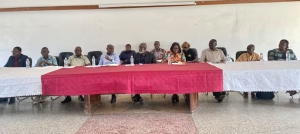
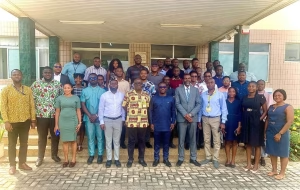
The Ghana Atomic Energy Commission (GAEC) has deepened scientific collaboration with leading French universities to address the environmental and public health impacts of illegal mining in Ghana.
The collaboration is being implemented under the NKABOM 2026 Mobility Research Grant, a programme administered by the French Embassy in Ghana to promote scientific exchange and deepen research cooperation between Ghana and France.
The initiative has brought together researchers from GAEC, the University of Lille, the University of Bordeaux, the Council for Scientific and Industrial Research (CSIR), the Noguchi Memorial Institute for Medical Research, and the University of Ghana.
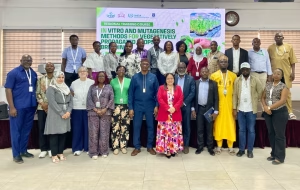
As part of the programme, Prof. Philippe Le Coustumer of the University of Bordeaux undertook a week-long visit to GAEC from October 22 to 28, 2026, where he held discussions with the Ghanaian counterparts at GAEC, focused on expanding scientific cooperation, building research capacity, and developing innovative solutions to environmental and socio-economic challenges facing mining communities.
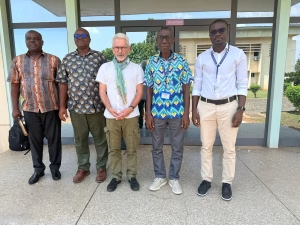
The visit also highlighted the growing importance of international research partnerships in addressing the complex consequences of illegal artisanal gold mining, which continue to affect water resources, human health, livelihoods, and sustainable development across several regions of Ghana.
At the centre of the collaboration is a research project titled “Mining Illegal Networks: Environmental and Community Livelihood Assessment for Resilience.” It seeks to generate scientific evidence on the environmental and social impacts of illegal mining while identifying practical and sustainable interventions that can improve living conditions in affected communities.
The Director General of GAEC, Prof. Samuel Boakye Dampare, welcomed the collaboration and underscored the value of scientific research in addressing national development challenges.
“This partnership reflects GAEC’s commitment to leveraging science, technology and innovation to provide solutions to issues affecting communities and contribute to sustainable development,” he noted.
He further indicated that the outcomes of the study have the potential to inform drinking water policies and support Ghana’s efforts toward achieving Sustainable Development Goal 6, which focuses on ensuring access to clean water and sanitation for all.
Speaking on the significance of the initiative, Dr. Andrews Obeng Affum, lead investigator of the Ghanaian research team and a scientist at the Environmental Resources Research Centre (ERRC), GAEC, noted that many communities in the Western, Western North and Eastern Regions continue to face serious challenges arising from heavy metal contamination of drinking water sources linked to illegal mining activities.
According to him, the research is expected to contribute to the development of affordable and locally adaptable water treatment solutions, including plant-based coagulants, capable of improving water quality and reducing the incidence of waterborne diseases and other chronic health conditions associated with contaminated water sources.
“Beyond its environmental and health dimensions, the project is expected to deliver significant socio-economic benefits by supporting safer water access, protecting livelihoods, and strengthening the resilience of vulnerable communities. The findings are also expected to provide evidence-based recommendations to support national policy interventions and sustainable resource management strategies,” he added.
He indicated that discussions on future areas of collaboration between GAEC and French institutions, including postgraduate training, sandwich PhD programmes, researcher exchanges, and joint research projects were underway.
“Plans are underway for the signing of a Memorandum of Understanding between GAEC and the University of Lille to formalise and expand the partnership,” he said.
Prof. Le Coustumer, during his engagement with researchers, delivered a presentation on emerging opportunities for collaboration with European research institutions, particularly in the area of microplastics research, a field of growing global interest due to its implications for environmental sustainability and public health.
Additionally, the Principal Investigator (PI) of the French research team, Prof. Arnaud Gauthier of the University of Lille, joined the discussions virtually, engaging with the local project team on ongoing activities and future directions of the collaboration. The meeting was held in the presence of Prof. Philippe Le Coustumer, who is leading the French delegation’s visit to Ghana.
The Ghanaian research team is led by Dr. Andrews Obeng Affum and comprises Dr. Michael Doleku of the CSIR-Water Research Institute, Prof. Gloria Ivy Mensah of the Noguchi Memorial Institute for Medical Research, Dr. David Saka of the Isotope Hydrology Centre, GAEC and Prof. Aaron Kobina Christian of the Regional Institute for Population Studies, University of Ghana.
The French team is led by Prof. Arnaud Gauthier of the University of Lille and includes Prof. Philippe Le Coustumer of the University of Bordeaux.
The facilitation of this exchange of expertise, knowledge and technology between researchers in both countries is expected to advance scientific innovation, strengthen research capacity, and contribute to socio-economic development in Ghana and France.
By: CPRC/CCD