The Biotechnology and Nuclear Agriculture Research Institute (BNARI) of the Ghana Atomic Energy Commission (GAEC) has commenced a regional training programme to equip African scientists with advanced crop improvement techniques.
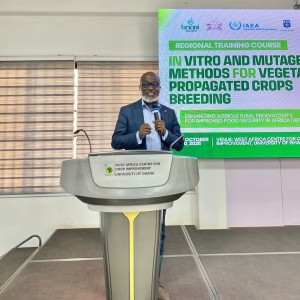
The five-day training course on In Vitro and Mutagenesis Methods for Vegetatively Propagated Crops Breeding, aimed at enhancing food security across Africa, began on Monday, October 26, 2026, at the West Africa Centre for Crop Improvement (WACCI), University of Ghana.
The programme is being conducted under the International Atomic Energy Agency (IAEA)-supported AFRA Project RAF5092, titled “Enhancing Agricultural Productivity for Improved Food Security in Africa”.
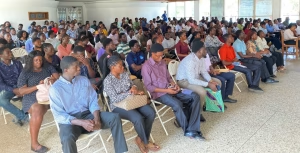
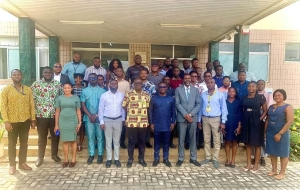
The training programme brought together experts and scientists from several African countries to build capacity in plant tissue culture, mutation breeding, and other modern crop improvement techniques.
In his welcome address, the Director-General of GAEC, Prof. Samuel Boakye Dampare, noted that over the years, BNARI has built significant expertise in mutation breeding, plant tissue culture, molecular biology, plant disease diagnostics and the conservation of valuable plant genetic resources.
“BNARI’s research demonstrates the practical value of these approaches. A notable achievement is Tek-Bankye, a cassava variety developed through mutation breeding research. Additionally, BNARI has contributed to the development and release of seven improved, yellow-fleshed mutant cassava varieties with enhanced beta-carotene content,” he explained.
He mentioned that BNARI has supported the introduction, multiplication and dissemination of the MD2 pineapple variety through tissue culture, alongside efforts to propagate and conserve other economically important crops including plantain and banana.
Prof. Dampare further highlighted BNARI’s designation as an IAEA Collaborating Centre in Plant Breeding and Genetics, describing it as a recognition of the Institute’s growing expertise and leadership in agricultural research.
“The designation of BNARI as an IAEA Collaborating Centre in Plant Breeding and Genetics recognises the Institute’s expertise and potential to advance regional training, collaborative research and technology transfer,” he added.
Addressing the challenges confronting African agriculture, Prof. Dampare noted that climate change, emerging crop diseases and the growing demand for nutritious food require innovative and collaborative research approaches.
He therefore encouraged participants to engage actively in the training, exchange experiences and build partnerships that would continue beyond the programme.
“The success of this training will be measured not merely by the knowledge acquired, but by its application and sharing within your institutions,” he noted.
Delivering remarks on behalf of the IAEA, Dr. Cinthya Zorrilla, representative of the Agency’s Plant Breeding and Genetics Sub-programme, reiterated the IAEA’s commitment to promoting the use of nuclear techniques in agriculture and other sectors including health, environmental management and industry.
She explained that the training forms part of the IAEA and the Food and Agriculture Organization (FAO) of the United Nations’ Atoms4Food initiative, which seeks to provide comprehensive and multidisciplinary solutions to agricultural challenges.
She observed that mutation breeding should be considered a complementary tool alongside conventional breeding, gene editing and other crop improvement technologies.
“We are very glad to be able to deliver this training course. We expect that it is useful for your work,” she stated.
The Chairman of the GAEC Board, Prof. Abdulai Baba Salifu, who officially opened the training programme, took the opportunity to welcome the participants from across Africa and described the course as a “Pan-African programme” that reflects the collective commitment to addressing the continent’s food security challenges.
“We are happy that this is a regional programme, but I dare say this is a Pan-African programme,” Prof. Salifu said.
He observed that vegetatively propagated crops such as cassava, yam, plantain, banana and potatoes remain vital to the livelihoods of millions of African households but are often difficult to improve through conventional breeding methods.
According to him, mutation breeding offers a practical pathway for generating useful genetic variation while preserving desirable characteristics in existing varieties.
“By the end of this programme, you should be able to design a complete mutation breeding scheme for your own institution. The key is the knowledge you are going to gain here, not merely the certificate you will take away,” he added.
Prof. Salifu further encouraged participants to build lasting professional networks, collaborate across borders and continue exchanging ideas after the training to improve regional agricultural research and innovation efforts.
By: CPRC/CCD